In this Thanksgiving Day special, we reach back into our archives for three treats: we air our 2005 interview with the late great Studs Terkel talking about his last book, And They All Sang. Then food psychologist Brian Wansink gives us tips on how not to overeat in this excerpt from our 2006 interview about his book Mindless Eating. Finally, Native American storyteller and historian Marge Bruchac tells us the real story of Thanksgiving.
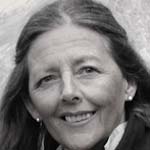
Studs Terkel
Studs Terkel
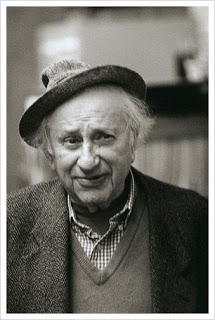
Late great radio man and chronicler of 20th century life, Studs Terkel was long a hero to Francesca. She leaped at the chance to interview him when, at the age of 92, he came out with his last book, And They All Sang: Adventures of An Eclectic Disc Jockey.
A homage to the power of music to bring out the best in humanity, the book features conversations Terkel had with some of the greatest musicians of the 20th century — like Bob Dylan, Dizzy Gillespie and Mahalia Jackson — on his famed daily radio show on WFMT in Chicago. And They All Sang was his 14th book.
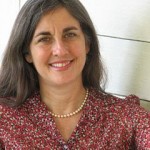
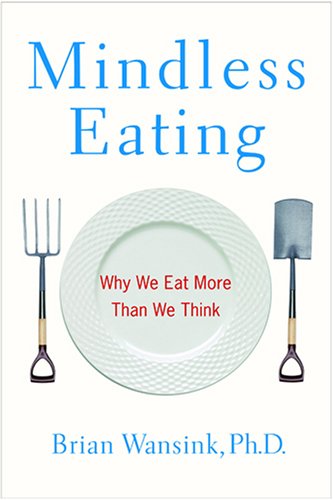
Brian Wansink
CORRECTION! In September 2018, Brian Wansink resigned from the Cornell Food Lab after accusations of falsified research came out. Among the papers that were found to be faulty (and were retracted by their publishers) were some featured on this interview.
There are many drivers of the obesity epidemic. Food is everywhere and portions tend to be supersized. How can we resist the temptations that lures us from all sides?
Food psychologist Brian Wansink has the answer. Back in 2006, WV spoke with him about his book, MIndless Eating: Why We Eat More Than We Think. Today we play an abridged version of that interview.
Wansink is the director of the Cornell Food and Brand Lab.
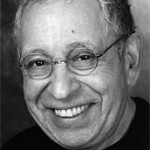
Marge Bruchac
Marge Bruchac
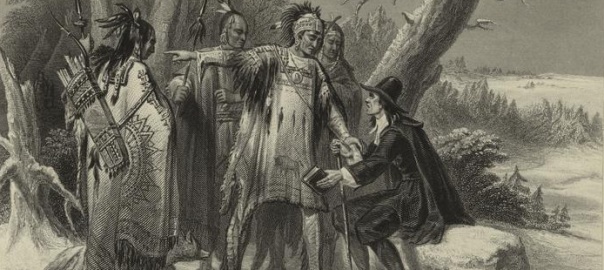
When Thanksgiving rolls around, Native American storyteller Marge Bruchac gets a lot of requests to talk about the first Thanksgiving, when the English settlers got together with the Wampanoag natives of Massachusettsfor a feast. The year was 1621. Bruchac co-authored the book, 1621: A New Look At Thanksgiving.
Marge Bruchac is an anthropologist, historian, and museum consultant. She’s also a performer of Algonkian Indian music and oral traditions. In addition to 1621, she’s the author of other books, including the children’s book, Malian’s Song.
I love talking to authors about their awesome books, but that means I have to read — a lot! You’d be shocked at how many authors thank me for actually reading their books (I guess a lot of interviewers don’t.)
Of course, that’s one of the benefits of producing Writer’s Voice: I get to indulge my reading habit and ask questions of the authors.
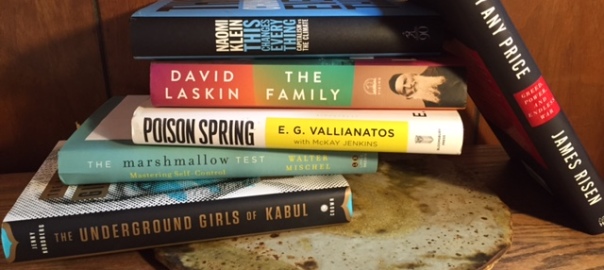
But there’s so much great stuff coming out all the time that sometimes my desire to devour all of it gets ahead of the time available. That’s when I find myself with more books on my plate than I bargained for. This is one of those weeks. But what books! I just finished the first one: David Laskin’s THE FAMILY. Read on for my take on his book and more. Continue reading →
Then Katy Simpson Smith talks about her novel, The Story of Land And Sea (Harper Collins, 2014.) It takes place just after the Revolutionary War, when ideas of equality and liberty were transforming America.
NEWSFLASH! We’re excited to announce that Writer’s Voice has a redesigned, more user friendly website. It’s built to work with all your web devices: smart phones, tablets and computers.
Explore the site, join the email list and keep an eye on exclusive features we’re rolling out in the coming weeks. Let website designer Bill Weye know how much you appreciate this new design (or tell him what else you’d like to see there). We love his work!Continue reading →
Lois Leveen talks about the remarkable true story of Mary Bowser, a freed slave who became a Union spy right inside the Confederate White House. Her acclaimed new novel, THE SECRETS OF MARY BOWSER, is based on it. And Eve LaPlante talks about her terrific new book, MARMEE AND LOUISA. It’s about the powerful relationship between Louisa May Alcott and her mother Abigail. Continue reading →
Louise Erdrich talks about her powerful new novel, THE ROUND HOUSE. It is a finalist for the 2012 national book award for fiction. And economist Richard Wolff discusses his new book, OCCUPY THE ECONOMY. It’s about the crisis of capitalism and what to do about it.
David Graeber talks about his fascinating study of — and polemic on — debt, DEBT: The First 5000 Years. It’s about the role of debt in human society and what to do about it today.
Susan Jacoby talks about NEVER SAY DIE, her trenchant critique of the myth of the “new” old age. And Dr. Allan Teel explains his innovative, community-based approach to elder care; his book is ALONE AND INVISIBLE NO MORE.
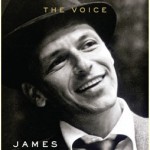
Author James Kaplan talks about his riveting biography of Frank Sinatra, FRANK: The Voice (Doubleday, November 2010.) And clips of Sinatra’s singing are aired, from his early years as part of Tommy Dorsey’s orchestra to James Kaplan’s own Sinatra favorites, arranged by Nelson Riddle.
Marvin Kitman talks about his article in November’s Harper’s magazine, Murdoch Triumphant. Peter Lehner tells us about the BP Gulf Oil disaster — what allowed it to happen, and what to do about it now. His book is IN DEEP WATER. And we get tips on eating during the holidays from food psychologist Brian Wansink.
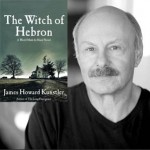
Futurist James Howard Kunstler talks about THE WITCH OF HEBRON, his latest novel about a postindustrial, post collapse, America. And John Michael Greer spells out how we get to — and get through — the long emergency. His book is THE ECOTECHNIC FUTURE.
Writers Voice talks with Sasha Polakow-Suransky about his book, THE UNSPOKEN ALLIANCE. And, in an excerpt from our 2009 interview, Israeli journalist Amira Hass talks about her Holocaust survivor parents’ involvement in the Israeli peace movement. Continue reading →



 Author