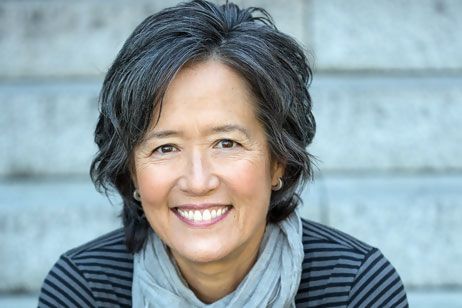
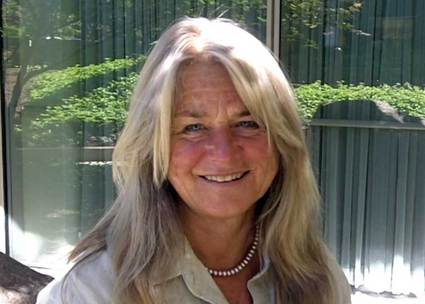
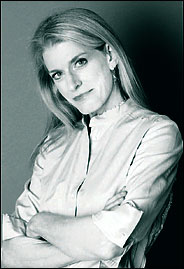
Ruth Ozeki talks about her acclaimed new novel, A Tale For The Time Being. It’s about a Japanese-American teenager, a Canadian-Japanese writer, and the time-twisting connection between them after the Japanese tsunami. And Gretel Ehrlich discusses her riveting new book, Facing the Wave: A Journey in the Wake of the Tsunami.
Barbara Garson talks about her new book, DOWN THE UP ESCALATOR: How the 99% Live in the Great Recession. And Citizens United gave the 1%, like the Koch Brothers, inordinate influence over our political process. Now they’re moving to take over our media, as well. Filmmaker Tia Lessin discusses the film she co-directed, CITIZEN KOCH, and how its distribution is being threatened by its namesake. Continue reading →
We re-play our 2012 interview with Rebecca MacKinnon about her book Consent of the Networked. Then we look back again at Wikileaks and what it means for press freedom: we air our 2010 interviews with the late Alexander Cockburn and with Tim Karr of the organization, Free Press. And finally, we hear a Spring poem from Philip Schultz: Bleeker Street.
Marisa Silver talks about her acclaimed new novel, MARY COIN. It’s about a famous photograph of a migrant worker taken during the Great Depression. And Jess Walter discusses his collection of short stories set during the Great Recession, WE LIVE IN WATER. Continue reading →
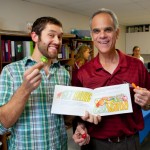
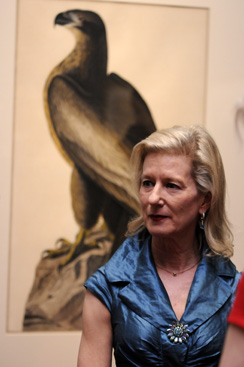
Chaz Nielsen, left; Pierre Rouzier, rightRoberta Olsen
Curator Roberta Olson talks about her book and the New York Historical Society exhibition, AUDUBON’S AVIARY. It’s about the original watercolors for Audubon’s The Birds of America.
And a new bilingual children’s book takes aim at childhood obesity. Chaz Nielsen talks about HENRY GETS MOVING.
In this fourth episode of our Writers Voice special series, The River Runs Through Us, Brian Kitely talks about THE RIVER GODS, his novel-in-vignettes of Northampton, Massachusetts from its founding to today; Native American scholar Marge Bruchac tells us about the original inhabitants of the Valley, and Pioneer Valley Planning Commission director Tim Brennan discusses the history and future of the Connecticut River in Massachusetts.
Our thanks to Mass Humanities for their support for this series.
Patricia Klindienst talks about her book, THE EARTH KNOWS MY NAME: Food, Culture, and Sustainability in the Gardens of Ethnic Americans. (Encore interview.)Â And then, America needs more farmers — and more young people are showing up to fill that need. Farmer and author Rebecca Thistlethwaite joins us in the second half of our show to talk about how sustainability-minded farmers can survive and thrive in farming today. Her book is FARMS WITH A FUTURE:Â Creating and Growing a Sustainable Farm Business.
The late Anthony Lewis on his “biography of the First Amendment,” Freedom for the Thought That We Hate. Lewis died on March 25, 2013. And Edward Ball talks with Drew Adamek about his book, The Inventor and the Tycoon. It’s about how modern media were born out of an unlikely partnership between a tycoon and an inventor who was a murderer.
THANK YOU From Writers Voice Hosts Drew Adamek and Francesca Rheannon
We want to send a big shout out of thanks to all who sent in donations to our Kickstarter Campaign to support our special series, The River Runs Through Us. We’re happy to report we exceeded our goal and have been able to heave a huge sigh of relief. Thanks SO much — and tune in to our next episode of The River Runs Through Us, coming up next week on WV. We’ll be listing our supporters on this website in the coming weeks. Continue reading →
Lois Leveen talks about the remarkable true story of Mary Bowser, a freed slave who became a Union spy right inside the Confederate White House. Her acclaimed new novel, THE SECRETS OF MARY BOWSER, is based on it. And Eve LaPlante talks about her terrific new book, MARMEE AND LOUISA. It’s about the powerful relationship between Louisa May Alcott and her mother Abigail. Continue reading →
Russ Kick, editor of The Graphic Canon, talks about the two volume set of the western world’s greatest literature, rendered in graphic novel form. And Louise Erdrich talks about her novel The Round House. It’s about the brutal rape and beating of a Native American woman and her struggle for justice against her non-native perpetrator. Continue reading →
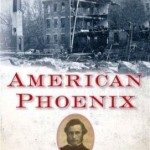
Silk manufacturing was one of the most important industries to emerge out of the Connecticut River Valley in the 19th century. William Skinner was, perhaps, the most influential of the textile magnates. He lived the American Dream: a poor immigrant, he used grit and skill to build an industrial behemoth– and then lost everything in a catastrophic flood. But he rose like a phoenix, rebuilding his mill on the mighty Connecticut River and thereby putting Holyoke, Massachusetts on the world map.
Francesca Rheannon talks with his great granddaughter, Sarah S. Kilborne, about her book, American Phoenix, The Remarkable Story of William Skinner, a Man Who Turned Disaster Into Destiny, to learn more about the forces that shaped his life and the economy of the Connecticut River Valley.