Tag Archives: Writer’s Voice

Podcast

Victoria Hetherington + Silvia Park on Human-AI Relationships

Writer’s Voice: compelling conversations with authors who challenge, inspire, and inform.

A machine that never judges us may also teach us to forget how human relationships work.

Writer’s Voice talks with Victoria Hetherington about The Friend Machine, her investigation into people who seek friendship, therapy and love from AI. We explore loneliness, simulated care, privacy, emotional dependence and the extraordinary power of the corporations building these systems.

“That’s probably my primary concern, that moral de-skilling might occur.” — Victoria Hetherington

Then, we revisit our 2025 conversation with Silvia Park about her sci-fi novel Luminous. Set in a reunified future Korea, the novel follows a family whose estranged siblings include two humans and a robot.

“What I really question is, if robots exist in this world, would they serve as an outlet or would they amplify our dark urges?” — Silvia Park

Together, these books grapple with salient questions arising from AI and monopoly corporate power. Can programmed affection become love? And what does how we treat A.I. entities say about ourselves?

Follow us on Bluesky @writersvoice.bsky.social and subscribe to our Substack. Or find us on Instagram @WritersVoicePodcast.

Love good coffee? Want to support Writer’s Voice? Head on over to Larry’s Coffee using this LINK, and you’ll earn $30 for the show!

You might also like: Bruce Holsinger on AI’s Moral Dilemmas, Ray Nayler on AI and Autocracy

Tags: Victoria Hetherington, The Friend Machine, Silvia Park, Luminous, AI companions, artificial intelligence, AI friendship, AI therapy, sentient robots, AI ethics, AI privacy, Writer’s Voice

Read The Transcript

Continue reading

Podcast

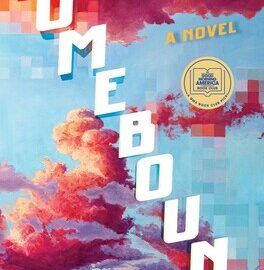
Can Sci-Fi Save Us? John Feffer on SONGLANDS and Portia Elan on HOMEBOUND

Writer’s Voice: compelling conversations with authors who challenge, inspire, and inform.

Can science fiction help us imagine a way through climate crisis, runaway corporate power, and the rise of AI?

This week, we talk with John Feffer about Songlands and Portia Elan about Homebound, two speculative novels that ask how we can make a livable future in an age of crisis.

Songlands, the final novel in Feffer’s Splinterlands trilogy, takes us into a climate-ravaged world where nations have fractured and a biotech corporation holds enormous power. Yet poetry, collective action, and a conscious, caring AI offer another way forward.

“Love is an important kind of operating system, if you will, to define one’s relations with the world.” — John Feffer

Portia Elan’s Homebound travels across 600 years, connecting a queer coder in 1985 with a smuggler in 2585. Their stories come together through grief, a mysterious video game, found family, and the moral choices that shape history.

“[AI] is a reflection of the values of the creators. I’m afraid of the human choices, not so much of the LLM choices.” — Portia Elan

Follow us on Bluesky @writersvoice.bsky.social and subscribe to our Substack. Or find us on Instagram @WritersVoicePodcast.

Love good coffee? Want to support Writer’s Voice? Head on over to Larry’s Coffee using this LINK, and you’ll earn $30 for the show!

[Episode 1036]

Read The Transcript

Continue reading

Podcast

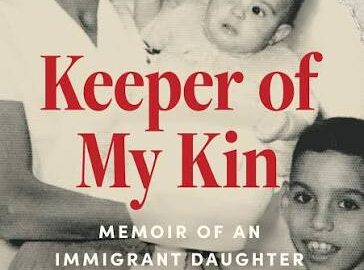
Ada Ferrer on Keeper of My Kin + T.J. English on Havana & The Mob

Writer’s Voice: compelling conversations with authors who challenge, inspire, and inform.

The Cuban Revolution transformed a nation. It also ended the Mob’s dream of turning Havana into the center of a global criminal empire. And it divided families.

Writer’s Voice talks with Cuban American historian Ada Ferrer about her memoir, Keeper of My Kin. When Ferrer was ten months old, her mother carried her out of Cuba without saying goodbye to Ferrer’s nine-year-old half-brother, Poli. The separation was supposed to be temporary. It lasted seventeen years.

“We tend to think that history happens up here or something, but all these historical events, their geopolitical decisions, they reverberate in individual lives, at the heart of families, in these really intimate spaces, in the space between people, family members who are separated, right?” — Ada Ferrer

Then Writer’s Voice returns to a 2008 interview with journalist T.J. English about Havana Nocturne: How the Mob Owned Cuba and Then Lost It to the Revolution. English describes how Meyer Lansky and other American mobsters allied themselves with dictator Fulgencio Batista, turning Havana into a glittering marketplace of casinos, nightclubs, prostitution, political corruption, and corporate profit.

“In that period, Havana became a kind of a paradise, a mobster’s paradise.” — T.J.English

The Mob hoped Cuba would become the base of a multinational empire. Instead, its exploitation of the island became a powerful symbol for the revolution that swept Batista and the gangsters from power.

Follow us on Bluesky @writersvoice.bsky.social and subscribe to our Substack. Or find us on Instagram @WritersVoicePodcast.

Love good coffee? Want to support Writer’s Voice? Head on over to Larry’s Coffee using this LINK, and you’ll earn $30 for the show!

[Episode 1035]

Tags: Keeper of My Kin, Ada Ferrer, T.J. English, Havana Nocturne, Cuban Revolution, Cuba, Cuban history, Cuban exile, Cuban immigration, Mariel boatlift, Mafia in Cuba, Meyer Lansky, Fulgencio Batista, Fidel Castro, Writer’s Voice, Francesca Rheannon,

Read The Transcript

Continue reading

Podcast

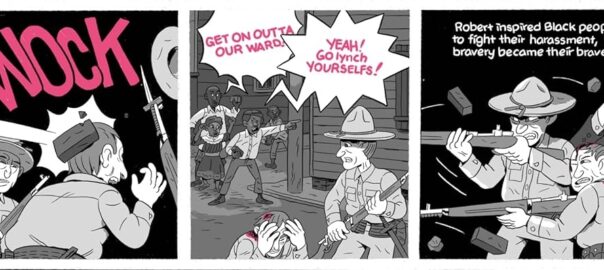
Ben Passmore on Black Resistance & David Baron on the Martian Craze

Writer’s Voice: compelling conversations with authors who challenge, inspire, and inform.

In our first segment, comic artist Ben Passmore takes us on a time-bending, darkly funny journey through more than a century of Black resistance in his graphic history Black Arms to Hold You Up. It’s a story of struggle, rebellion, and what liberation really means when the fight never ends.

“We’re in a life-or-death struggle, and I think we need to accept that.” — Ben Passmore

Then, science journalist David Baron joins us to talk about The Martians — the true story of how turn-of-the-(last)-century America fell in love with the idea of life on Mars. From telescopes to tabloid headlines, Baron shows how our dreams of other worlds reveal who we really are.

“It was a time of great unrest… and so the idea that maybe Earth was clearly turning out not to be a very perfect place — and that maybe there was a better civilization on the planet next door — really captured the public’s imagination.” — David Baron

Follow us on Bluesky @writersvoice.bsky.social and subscribe to our Substack. Or find us on Instagram @WritersVoicePodcast 

Key Words: Writer’s Voice, Francesca Rheannon, Ben Passmore, David Baron, Black Arms to Hold You Up, The Martians, graphic novels, civil rights, alien craze, Black resistance, Mars, Percival Lowell, H.G. Wells, podcast author interview,

You Might Also Like: Tamara Payne on Les Payne’s THE DEAD ARE ARISING, Aaron Robertson, THE BLACK UTOPIANS.

Read The Transcript

Continue reading