
Podcast: Play in new window | Download
Subscribe: Apple Podcasts | RSS
Writer’s Voice: compelling conversations with authors who challenge, inspire, and inform.
Can science fiction help us imagine a way through climate crisis, runaway corporate power, and the rise of AI?
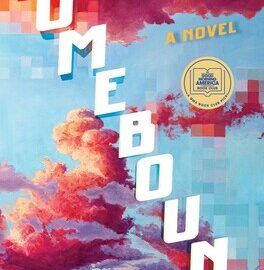
This week, we talk with John Feffer about Songlands and Portia Elan about Homebound, two speculative novels that ask how we can make a livable future in an age of crisis.
Songlands, the final novel in Feffer’s Splinterlands trilogy, takes us into a climate-ravaged world where nations have fractured and a biotech corporation holds enormous power. Yet poetry, collective action, and a conscious, caring AI offer another way forward.
“Love is an important kind of operating system, if you will, to define one’s relations with the world.” — John Feffer
Portia Elan’s Homebound travels across 600 years, connecting a queer coder in 1985 with a smuggler in 2585. Their stories come together through grief, a mysterious video game, found family, and the moral choices that shape history.
“[AI] is a reflection of the values of the creators. I’m afraid of the human choices, not so much of the LLM choices.” — Portia Elan
Follow us on Bluesky @writersvoice.bsky.social and subscribe to our Substack. Or find us on Instagram @WritersVoicePodcast.

Love good coffee? Want to support Writer’s Voice? Head on over to Larry’s Coffee using this LINK, and you’ll earn $30 for the show!
[Episode 1036]
Segment One, John Feffer on Songlands
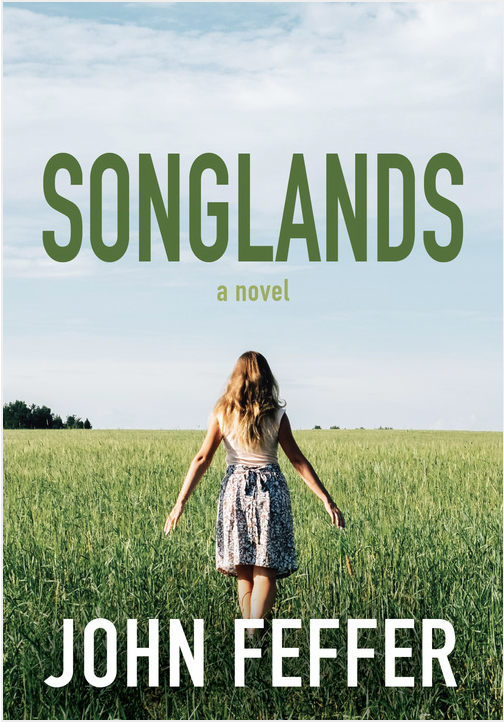
John Feffer’s Songlands is the third novel in his Splinterlands trilogy. It takes place in a climate-ravaged future, where the all-powerful CRISPR Corporation offers survival only to a privileged few.
A reluctant poet, Aurora, becomes part of the struggle against it, aided by Karen, the first conscious AI — an AI with a conscience. Writer’s Voice talks with Feffer about climate justice, dangerous feedback loops, geoengineering, corporate oligarchy, and our tendency to project human drives for domination onto AI. We also explore poetry as a force for political resistance, and why we still need to create in the middle of catastrophe.
Segment Two, Portia Elan on Homebound
Portia Elan’s Homebound spans 600 years, linking Bex, a queer coder grieving her uncle in 1985, with Yeshiko, a smuggler fighting to preserve her independence in 2585.
Between them lies a mysterious video game, generations of stories, and Haya, a conscious automaton created to care for damaged ecosystems. I talk with Portia about transforming grief through creativity, finding home in chosen family, and the values humans build into technology.
We explore how stories invite the reader to participate, why everyday kindness matters, and what it means to choose hope as a moral action rather than a comforting feeling.