
Podcast: Play in new window | Download
Subscribe: Apple Podcasts | RSS
Writer’s Voice: compelling conversations with authors who challenge, inspire, and inform.
What happens when tech workers challenge the companies they once believed in?
This week Writer’s Voice talks with Clarissa Redwine and JS Tan about Against Tech Oligarchy. They helped build the tech worker movement, and they’re candid about both its victories and the limits of its organizing strategies. We talk about Google’s Project Maven, the Kickstarter union drive, and why winning union recognition doesn’t automatically give workers the leverage they need.
“The only way to hold our bosses and our companies and institutions accountable is by having pressure from below.” — Clarissa Redwine
Then I revisit my conversation with Noam Scheiber about Hollywood writers, AI and the growing solidarity among college-educated workers. He also recommends Redwine and Tan’s book.
“Their book is called Against Tech Oligarchy, Worker Resistance in the World’s Most Powerful Industry. And I learned a lot from reading a galley of that book and I’ve learned a lot from the work over the years.” — Noam Scheiber
Follow us on Bluesky @writersvoice.bsky.social and subscribe to our Substack. Or find us on Instagram @WritersVoicePodcast.

Love good coffee? Want to support Writer’s Voice? Head on over to Larry’s Coffee using this LINK, and you’ll earn $30 for the show!
You might also like: Noam Scheiber on the Mutiny of the New Working Class, Maria Adelmann on Adjunct Labor
Clarissa Redwine and JS Tan, Against Tech Oligarchy
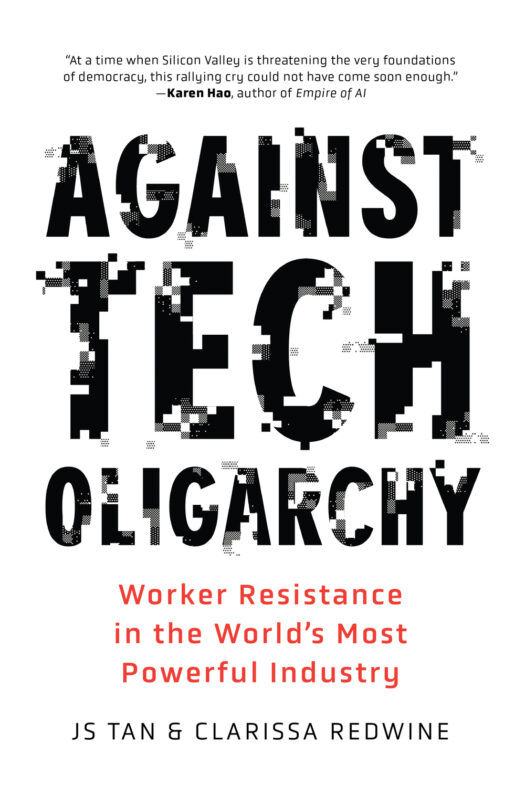
Clarissa Redwine and JS Tan talk about Against Tech Oligarchy and the movement they helped organize.
Drawing on their experiences at Kickstarter and Microsoft, they explain how tech workers’ belief in their employers’ missions gave way to conflict over the companies’ actions.
We discuss Google’s Project Maven, public pressure campaigns, retaliation, and the turn toward legally recognized unions.
Redwine and Tan also examine the limits of strategies they once championed. When software keeps generating revenue without workers at their desks, a strike requires a different understanding of leverage.
Our conversation asks how workers can test their power, defend their wins, and connect workplace organizing to larger questions about AI and corporate control.
Key topics:
- Tech companies’ democratic promises and workers’ disillusionment
- Google Project Maven and employee opposition to military AI
- Kickstarter organizing and management resistance
- Public pressure campaigns and union recognition
- Why tech strikes pose different challenges
- Finding leverage across jobs, teams and business models
- AI, solidarity and defending organizing victories
Noam Scheiber, Mutiny
In this archived excerpt, I talk with Noam Scheiber about Mutiny and the insecurity facing college-educated workers. We begin with Hollywood writers, whose once-stable careers became more precarious as streaming shortened employment and disrupted established paths into the profession.
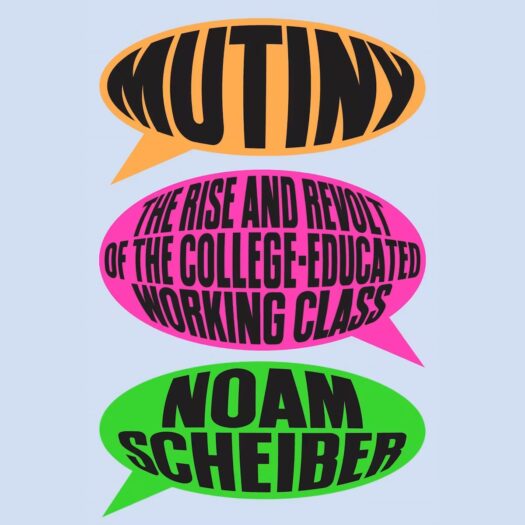
Scheiber explains how that insecurity, combined with fears of AI replacement, helped sustain the writers’ strike. We then explore growing worker consciousness in the tech industry and the possibility of solidarity between workers with and without college degrees.
He closes by recommending Clarissa Redwine and JS Tan’s Against Tech Oligarchy, connecting this discussion of economic insecurity to the first segment’s examination of organizing and worker power.