
Podcast: Play in new window | Download
Subscribe: Apple Podcasts | RSS
Writer’s Voice: compelling conversations with authors who challenge, inspire, and inform.
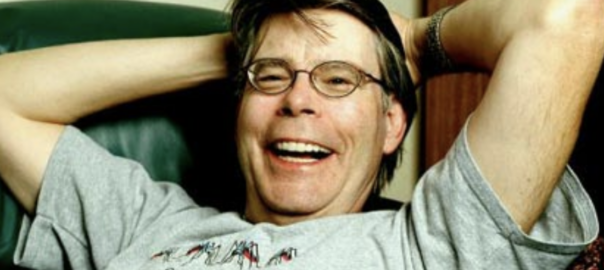
This week, we begin with a look at how Stephen King’s work strikes at the heart of our most basic fears. Caroline Bicks takes us inside Stephen King’s private archives to explore how horror works, and why King’s stories continue to haunt us. Her book is Monsters In The Archives.
“He doesn’t just write about monsters. He’s really writing about human emotions of grief and trauma and using horror as a way to help us metabolize our own very human experiences and fears.”
Then, another kind of fear: the dizzying precarity plaguing so many college graduates. Novelist Maria Adelmann joins me to talk about Adjunct, her darkly funny and deeply unsettling novel about exploitation, debt, and survival inside higher education.
“I wanted to make the point that a few things go wrong — a medical issue, no family support — and you can, even as a professor at a good college, become so poor that you don’t have a place to live.”
Follow us on Bluesky @writersvoice.bsky.social and subscribe to our Substack. Or find us on Instagram @WritersVoicePodcast.
Tags: Stephen King, Monsters in the Archives, Caroline Bicks, Stephen King archive, Pet Sematary, Carrie, Salem’s Lot, The Shining, Night Shift, horror writing craft, adjunct professor, Marie Adelmann, Adjunct novel, contingent faculty, academic precarity, student debt, university adjuncts, adjunct pay, adjunct crisis, Writer’s Voice podcast,
Love good coffee that’s also Fair-Trade? Want to support Writer’s Voice? Head on over to Larry’s Coffee using this LINK, and you’ll earn $30 for the show!
You Might Also Like: Anthony Horowitz, THE SENTENCE IS DEATH, Brian Goldstone on THERE IS NO PLACE FOR US
Caroline Bicks, Monsters In The Archives
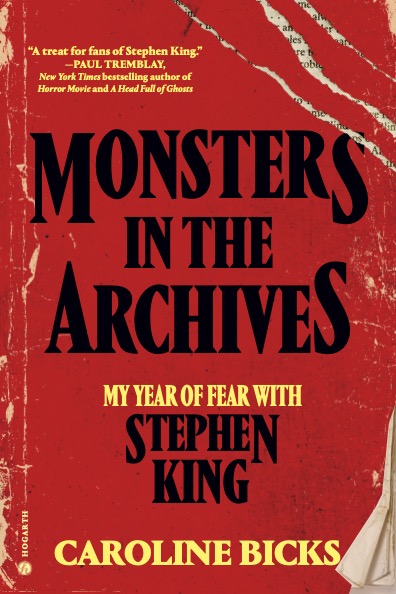
Caroline Bicks is the inaugural Stephen E. King Chair in Literature at the University of Maine and a scholar of Renaissance literature and Shakespeare.
She spent her sabbatical year inside the Kings’ private archive—reading the first drafts, copy-editor exchanges, and revision notes behind five major works including Pet Sematary, Carrie, Salem’s Lot, The Shining, and “The Boogeyman.” Her book, Monsters in the Archives: My Year of Fear with Stephen King, is the result.
In this conversation, Bicks explains why King’s horror works not just because of monsters, but because of the human emotions—grief, trauma, the fear of abandonment—that the monsters stand in for.
She traces her own childhood fear of the boogeyman back to the specific psychological mechanisms King exploits, and walks us through what the archives reveal: the version of Carrie that was almost an alien, the copy-editor arguments over the word “rattly,” the draft of Salem’s Lot where the town wasn’t a character yet. She also describes what it was like when King himself called her at home—and what happened when he walked into a room full of students, to their huge delight.
Key Topics
- Why Stephen King’s horror taps universal fears of grief, trauma, and abandonment
- What King’s private archives reveal about his revision process
- The transformation of Carrie from alien monster to empathetic victim
- Why Salem’s Lot is really about a town, not vampires
- King’s philosophy: words as matter, not just meaning
- Why King’s stories meet you differently at different points in your life
- King’s character-driven vs. plot-driven approach to storytelling
- The Shining drafts, and King’s complicated feelings about Kubrick’s film
Maria Adelmann, Adjunct
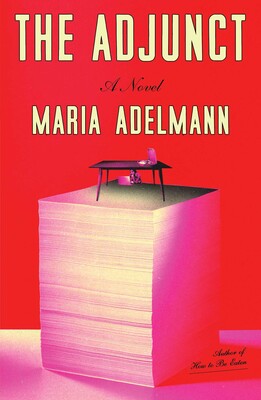
Maria Adelmann is the author of three books, including the novel Adjunct.
The book follows Sam, a PhD-holding adjunct professor whose financial situation deteriorates over the course of a single semester—from precarious to genuinely desperate—until she’s hiding under a desk in the adjunct office at 2am. On the surface, the novel is satire — but it might be closer to documentary.
In this conversation, Adelmann and Writer’s Voice host Francesca Rheannon—who was herself an adjunct at Keene State College in the 1990s for $1,500 per course—talk about what the numbers actually mean: 70% of college instructors are contingent laborers, 40% specifically labeled adjuncts, and a quarter of those make less than $25,000 a year.
They discuss how student debt, the gig economy, gender inequality, and a willful institutional blindness all converge in the figure of the adjunct. And they examine the campus novel as a genre: why it’s always been romantic, and why Adelmann’s deliberately isn’t.
Key Topics
- The adjunct labor crisis: statistics, causes, and human cost
- Class divisions within academia: adjuncts vs. tenure-track professors
- Student debt as structural trap
- Gender and race disparities among adjunct faculty
- Why universities became dependent on contingent labor
- The campus novel as genre — and why Adjunct is an “anti-campus novel”
- Unionization efforts and their unique challenges for adjuncts
- The gig economy parallel: academia and hustle culture