
Podcast: Play in new window | Download
Subscribe: Apple Podcasts | RSS
Writer’s Voice: compelling conversations with authors who challenge, inspire, and inform.
This week’s Writer’s Voice features two new books that take us into very different realms of hidden history.
First, Julia Cooke joins Francesca to talk about Starry and Restless, her vivid group portrait of Rebecca West, Martha Gellhorn, and Emily Hahn, three adventurous women writers who expanded what journalism could be, often while battling the constraints placed on women in their time.
“Women were central to voice-driven narrative journalism for at least the last century and a half.”
Then, we move from literary history to natural history, as nature journalist Sophie Pavelle takes us into a very different realm with her book To Have or To Hold. It’s a fascinating exploration of symbiosis, parasitism, and the intricate relationships that sustain the living world.
“The natural world is structured and founded upon these really intricate, complicated, ancient relationships.”
Follow us on Bluesky @writersvoice.bsky.social and subscribe to our Substack. Or find us on Instagram @WritersVoicePodcast.
Tags: Julia Cooke, Starry and Restless, Rebecca West, Martha Gellhorn, Emily Hahn, women journalists, Sophie Pavelle, To Have or To Hold, symbiosis, ecology, biodiversity, Writer’s Voice podcast,
Love good coffee that’s also Fair-Trade? Want to support Writer’s Voice? Head on over to Larry’s Coffee using this LINK, and you’ll earn $30 for the show! Buy today and get a FREE pair of Handmade Grass Coasters from their fair-trade artisan partners in Guatemala! A $15 value, yours free with purchase.
You Might Also Like: Ethel Payne, First Lady Of The Black Press, Slippery Beast: Ellen Ruppel Shell on Eels, Ecology, and the Global Wildlife Trade
Segment One: Julia Cooke, Starry & Restless
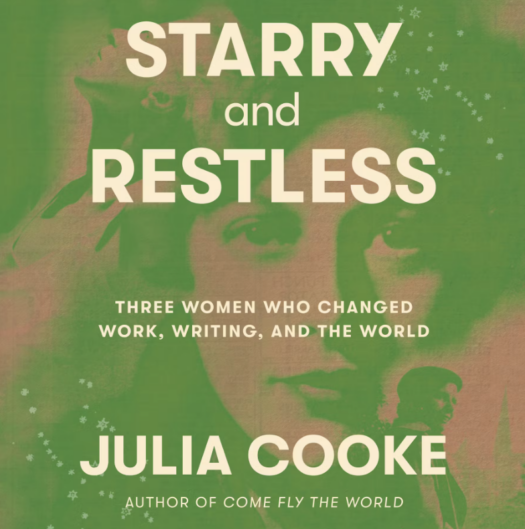
Julia Cooke’s Starry and Restless brings three remarkable women journalists back into focus: Rebecca West, Martha Gellhorn, and Emily Hahn.
These writers refused to stay within the limits set for women in the early twentieth century. They traveled widely, reported from conflict zones, and wrote with a voice and authority that helped shape what we now call literary journalism. Yet despite their influence and fame in their own time, their contributions were later minimized or left out of the canon.
In our conversation, Cooke makes a strong case that women were not peripheral but central to the development of narrative, voice-driven reporting. She points to the sheer scale of women’s contributions, from immersive reporting to stylistic innovation, and shows how constraints, like being barred from the front lines of war, actually pushed women journalists to tell different kinds of stories. They focused on civilian life, domestic spaces, and the human consequences of conflict, expanding what counted as news.
We also talk about how these writers challenged the idea of objectivity. By inserting themselves into their reporting and questioning authority, they offered a broader, more inclusive view of the world. Cooke highlights how they paid attention to people often overlooked, women, children, and working-class lives, and in doing so widened journalism’s field of vision.
The interview also explores the tension between creative work and domestic life, a thread that runs through the book and still resonates today. Cooke reflects on the ways motherhood, partnership, and economic necessity shaped these women’s careers, and how their “restlessness” was both a personal drive and a form of resistance.
Segment Two: Sophie Pavelle, To Have Or To Hold
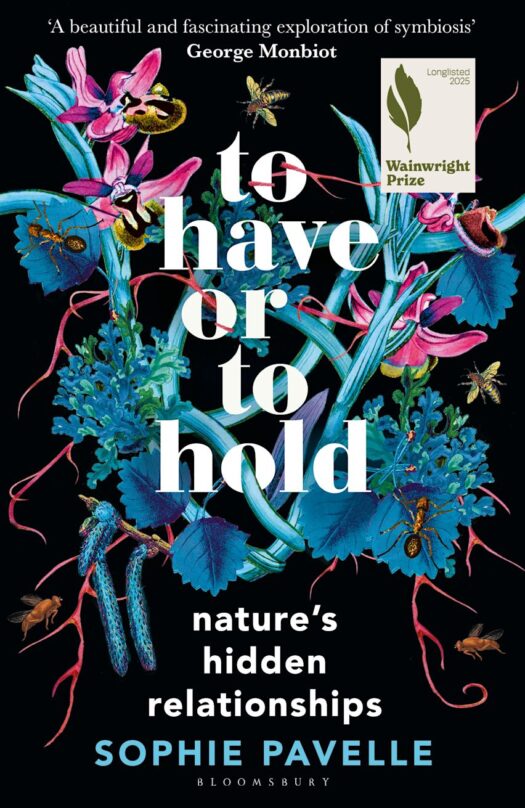
In To Have or To Hold, science journalist Sophie Pavelle takes us into the intricate and often surprising world of symbiosis, the relationships between living things that make life possible.
From parasites to pollinators, from microbes in our bodies to complex marine ecosystems, Pavelle shows that life on Earth is not built on isolation, but on constant interaction, dependence, and exchange.
In our conversation, Pavelle explains that symbiosis is far more complex than the simple idea of mutual benefit. These relationships can be cooperative, exploitative, or somewhere in between, and they are always shifting. She shares vivid examples, like the “mint sauce worm,” a tiny creature that hosts algae inside its body and lives partly like a plant, and parasites that move through multiple hosts, shaping entire ecosystems in the process.
We also talk about how deeply embedded humans are in these systems. Our own bodies are ecosystems, dependent on microbes for health and survival, and our relationship with the natural world is itself symbiotic. Pavelle challenges the idea that humans stand apart from nature, arguing instead that our survival depends on recognizing and respecting these connections.
The interview also turns to what’s at risk. Climate change, habitat loss, and even light pollution are disrupting these delicate relationships. But Pavelle also offers a hopeful perspective. By paying attention to how nature operates, taking only what we need, allowing complexity and balance, we might begin to repair some of the damage and build a more sustainable relationship with the living world.