
Podcast: Play in new window | Download
Subscribe: Apple Podcasts | RSS
Writer’s Voice: compelling conversations with authors who challenge, inspire, and inform.
What’s the best way to resist tyranny?
The two stories in this week’s episode suggest an answer: help the people around you, and hold on to your humanity.
First, in Dreaming of the River, Pauline Steinhorn draws on family journals to tell how her mother and grandmother survived Nazi forced labor and Bergen-Belsen. Her grandmother smuggled medicine into the camp. Her teenage mother depended on girls in her barracks who shared food and covered for each other when they fell ill.
Helping other people gave [my grandmother] a purpose while she was there. So she didn’t obsess about what a terrible fate she had. She focused on how she could help others. — Pauline Steinhorn
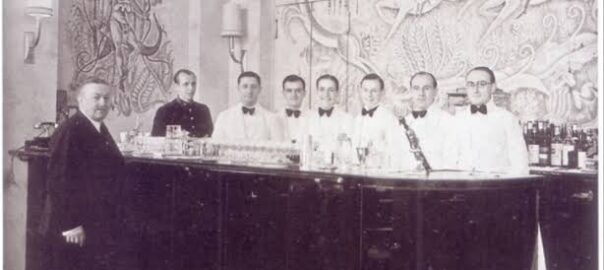
Then, in The Barman of the Ritz, based on a true story, Philippe Collin turns to fiction to tell the story of Frank Meier, a celebrated Jewish bartender who served Nazi officers in occupied Paris. Collin uses the Ritz to examine what privilege lets people overlook and how a man trying to survive comes to take risks for others.
I decided to write a novel because I did not have enough information about him. But immediately I said to myself, “it’s a golden opportunity because … I was allowed to get inside his head and imagine all his thoughts, all his fears, all his desires, anxieties. — Philippe Collin
Follow us on Bluesky @writersvoice.bsky.social and subscribe to our Substack. Or find us on Instagram @WritersVoicePodcast.

Love good coffee? Want to support Writer’s Voice? Head on over to Larry’s Coffee using this LINK, and you’ll earn $30 for the show!
You might also like: How to Be a Dissident, Lessons from Resistance Then and Now, Judy Batalion, THE LIGHT OF DAYS
Tags: Pauline Steinhorn, Dreaming of the River, Philippe Collin, The Barman of the Ritz, Writer’s Voice, Francesca Rheannon, Holocaust survival, Jewish resistance, Frank Meier, Nazi-occupied Paris, World War II historical fiction
Read Transcript: Pauline Steinhorn
Read Transcript: Philippe Collin
Pauline Steinhorn on Dreaming of the River
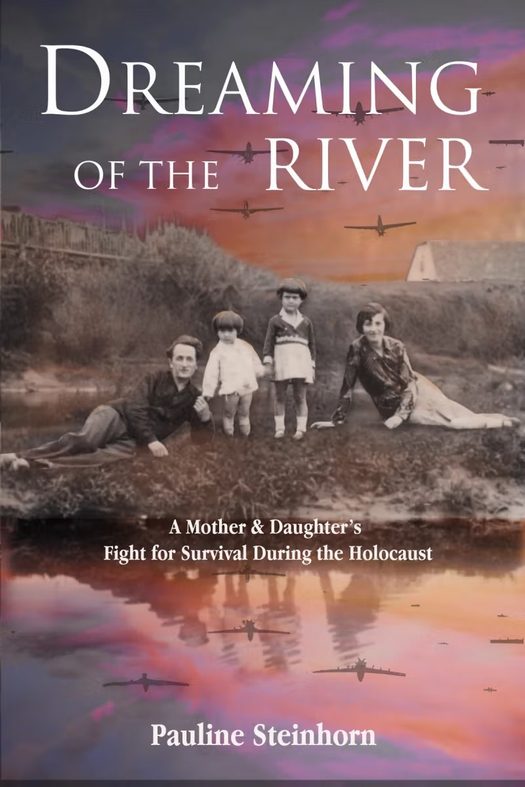
Pauline Steinhorn grew up hearing her mother’s stories about the Kamienna River in Poland. The family gathered on its sandy banks to eat, sing and play music.
During the Holocaust, the river became a place her mother, Hajuta Feldman, imagined returning to. At thirteen, a chance to see it again drew her to take her mother’s place on a work detail. At the end of that day, the factory gates closed and she was held as a forced laborer.
Steinhorn tells us what she learned when she found her grandmother Bronia’s account years after helping type her mother’s memoir. Bronia, a nurse, enlisted Polish supervisors and a pharmacist to get medicine into the camp. In Hajuta’s barracks, girls shared food, covered one another’s work and kept family traditions alive by reciting recipes and singing together.
The interview follows mother and daughter through Bergen-Belsen, liberation and recovery in Sweden. Steinhorn also talks about what it was like to grow up hearing these stories and how bringing the two women’s accounts together led her to become a Holocaust educator.
Philippe Collin on The Barman of the Ritz

When the Germans occupy Paris, Frank Meier keeps his job at the Hôtel Ritz. His new clientele includes Nazi officers who have no idea their bartender is Jewish. In The Barman of the Ritz, Philippe Collin imagines how the real Meier navigated four years of occupation, and what happened when staying behind the bar could no longer keep him out of danger.
Collin tells Francesca Rheannon how gaps in the archives led him to write a novel and invent a diary for Meier. They discuss Frank’s involvement in procuring false papers, an arrangement that earns him money and puts his life at risk. They also talk about Blanche, whom Collin sees as braver than Frank, and Ernst Jünger, whose charm makes it easy for Frank to overlook what he represents.
For Collin, the Ritz is a small world that reveals much about occupied France. Inside the hotel, guests can enjoy champagne and caviar while Parisians go hungry and Jews are arrested and deported. The interview asks what that insulation makes possible, how a person’s public role can obscure choices made in private, and what any of us might discover about ourselves if we faced the kinds of decisions Frank does.