Monthly Archives: May 2026

Podcast

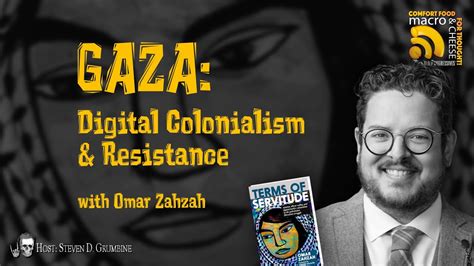
Omar Zahzah: How Silicon Valley Suppresses Palestinian Voices | Terms of Servitude

Writer’s Voice: compelling conversations with authors who challenge, inspire, and inform.

In this episode of Writer’s Voice, Francesca speaks with Omar Zahzah, Palestinian-American scholar, activist, journalist, and author of Terms of Servitude: Zionism, Silicon Valley, and Digital Settler Colonialism in the Palestinian Liberation Struggle.

“There’s never been a moment in time where Palestinians did not resist their dispossession. And consequently, there is not going to be a moment in time where Palestinians begin to cease resisting.”

Zahzah offers the first book-length analysis of how major social media platforms, including Facebook, Instagram, X, and TikTok, systematically suppress Palestinian content, and how that suppression is structurally connected to the financial, ideological, and political ties between Silicon Valley and the Israeli state.

The conversation covers the history of Palestinian resistance to silencing, the specific mechanics of digital censorship, the TikTok ban, the No Tech for Apartheid campaign, and the forms of resistance that Zahzah believes can still make a difference.

Then we revisit part of Francesca’s 2025 conversation with Omar El Akkad, about his book, One Day Everyone Will Have Been Against This

Follow us on Bluesky @writersvoice.bsky.social and subscribe to our Substack. Or find us on Instagram @WritersVoicePodcast.

Tags: Omar Zahzah, Terms of Servitude, Palestinian censorship, social media censorship Palestine, digital settler colonialism, Silicon Valley Israel, TikTok ban Palestine, big tech censorship, AI warfare Palestine, Palestinian liberation, Writer’s Voice podcast, Omar El Akkad

You Might Also Like: Omar El Akkad on Empire, Liberalism & Bearing Witness, Omar El Akkad, WHAT STRANGE PARADISE

Continue reading


Podcast

America’s Death Penalty Crisis + Abdul El-Sayed on Healing Politics

Writer’s Voice: compelling conversations with authors who challenge, inspire, and inform.

This week, Elizabeth Vartkessian joins me to discuss The Deserving: What the Lives of the Condemned Reveal About American Justice. Drawing on two decades as a mitigation specialist working with people facing the death penalty, she argues that America’s justice system reflects deeper failures in how we value human dignity, mercy, and opportunity.

“What I can do is everything possible to provide the context that people need to understand that my client is a person who has likely done a huge amount of harm that can’t be undone, but they are still a human being who is loved, who has potential, who has the capacity just like any other human being to grow, to change, to redeem.”  

Then we revisit part of my 2020 conversation with Dr. Abdul El-Sayed, now a candidate for the U.S. Senate from Michigan. In Healing Politics, he describes what he calls America’s “epidemic of insecurity” and explains why he left medicine to tackle the social and political causes of illness itself.

“Medicine is a social science, and politics is nothing but medicine on a large scale.”

Follow us on Bluesky @writersvoice.bsky.social and subscribe to our Substack. Or find us on Instagram @WritersVoicePodcast.

Tags: Elizabeth Vartkessian, The Deserving, death penalty, capital punishment, criminal justice, mitigation specialist, prison system, restorative justice, Abdul El-Sayed, Healing Politics, public health, healthcare inequality, Writer’s Voice podcast

You May Also Like: Abdul EL Sayed, HEALING POLITICS, Stephanie Canizales, SIN PADRES NI PAPELES

Continue reading

Podcast

Tim Weed’s The Gatepost + Farah Naz Rishi’s The Flightless Birds of New Hope

Writer’s Voice: compelling conversations with authors who challenge, inspire, and inform.

This week on Writer’s Voice, two novels explore what happens when people are forced out of the lives they thought they understood.

First, Tim Weed joins me to talk about The Gatepost, a speculative thriller that blends archaeology, psychedelics, quantum theory and Mesoamerican mythology into a story about grief, consciousness, and humanity’s fractured relationship with nature.

“Our mythologies have collapsed. They no longer explain the world. And so, I consider this to be a fun novel, but it’s also a novel that has a serious aspect to it. And this is part of weaving the new tapestry, the tapestry of a new mythology.”  

Then Farah Naz Rishi discusses The Flightless Birds of New Hope, a funny, tender, and deeply moving novel about three estranged siblings brought back together after the death of their parents and the escape of the family cockatoo.

“I think grief and humor come hand in hand. Usually you’ll find that some of the funniest people are those who have experienced intense hardship or suffering from depression. And they use humor as a way of making sure that people don’t worry about them.”  

Both books ask what it takes to move forward after loss, and whether connection, to family, to nature, or to something larger than ourselves, can help us find our way.

Finally, we listen to Richard Wilbur read his poem “Advice to a Prophet.” Hear our 2009 conversation with Wilbur here.

Follow us on Bluesky @writersvoice.bsky.social and subscribe to our Substack. Or find us on Instagram @WritersVoicePodcast.

Tags: Tim Weed, The Gatepost, psychedelics, Mesoamerican mythology, Inframundo, speculative fiction, Writer’s Voice podcast, Farah Naz Rishi, The Flightless Birds of New Hope, literary fiction, Richard Wilbur

Love good coffee that’s also Fair-Trade? Want to support Writer’s Voice? Head on over to Larry’s Coffee using this LINK, and you’ll earn $30 for the show!

You May Also Like: Tim Weed, THE AFTERLIFE PROJECT, Modern Psychedelics with Joe Dolce

Continue reading

Podcast

Caroline Bicks on Stephen King, Maria Adelmann on Adjunct Labor

Writer’s Voice: compelling conversations with authors who challenge, inspire, and inform.

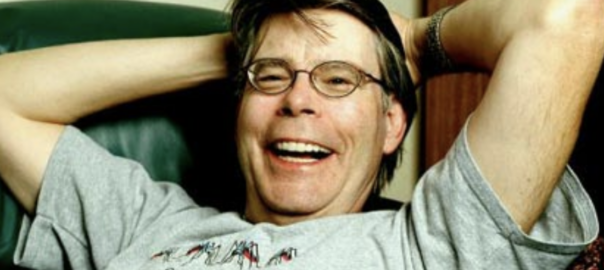
This week, we begin with a look at how Stephen King’s work strikes at the heart of our most basic fears. Caroline Bicks takes us inside Stephen King’s private archives to explore how horror works, and why King’s stories continue to haunt us. Her book is Monsters In The Archives.

“He doesn’t just write about monsters. He’s really writing about human emotions of grief and trauma and using horror as a way to help us metabolize our own very human experiences and fears.”

Then, another kind of fear: the dizzying precarity plaguing so many college graduates. Novelist Maria Adelmann joins me to talk about Adjunct, her darkly funny and deeply unsettling novel about exploitation, debt, and survival inside higher education.

“I wanted to make the point that a few things go wrong — a medical issue, no family support — and you can, even as a professor at a good college, become so poor that you don’t have a place to live.”

Follow us on Bluesky @writersvoice.bsky.social and subscribe to our Substack. Or find us on Instagram @WritersVoicePodcast.

Tags: Stephen King, Monsters in the Archives, Caroline Bicks, Stephen King archive, Pet Sematary, Carrie, Salem’s Lot, The Shining, Night Shift, horror writing craft, adjunct professor, Marie Adelmann, Adjunct novel, contingent faculty, academic precarity, student debt, university adjuncts, adjunct pay, adjunct crisis, Writer’s Voice podcast,

Love good coffee that’s also Fair-Trade? Want to support Writer’s Voice? Head on over to Larry’s Coffee using this LINK, and you’ll earn $30 for the show!

You Might Also Like: Anthony Horowitz, THE SENTENCE IS DEATH, Brian Goldstone on THERE IS NO PLACE FOR US

Continue reading