

Podcast: Play in new window | Download
Subscribe: Apple Podcasts | RSS
Writer’s Voice: compelling conversations with authors who challenge, inspire, and inform.
This week on Writer’s Voice, two novels explore what happens when people are forced out of the lives they thought they understood.
First, Tim Weed joins me to talk about The Gatepost, a speculative thriller that blends archaeology, psychedelics, quantum theory and Mesoamerican mythology into a story about grief, consciousness, and humanity’s fractured relationship with nature.
“Our mythologies have collapsed. They no longer explain the world. And so, I consider this to be a fun novel, but it’s also a novel that has a serious aspect to it. And this is part of weaving the new tapestry, the tapestry of a new mythology.”
Then Farah Naz Rishi discusses The Flightless Birds of New Hope, a funny, tender, and deeply moving novel about three estranged siblings brought back together after the death of their parents and the escape of the family cockatoo.
“I think grief and humor come hand in hand. Usually you’ll find that some of the funniest people are those who have experienced intense hardship or suffering from depression. And they use humor as a way of making sure that people don’t worry about them.”
Both books ask what it takes to move forward after loss, and whether connection, to family, to nature, or to something larger than ourselves, can help us find our way.
Finally, we listen to Richard Wilbur read his poem “Advice to a Prophet.” Hear our 2009 conversation with Wilbur here.
Follow us on Bluesky @writersvoice.bsky.social and subscribe to our Substack. Or find us on Instagram @WritersVoicePodcast.
Tags: Tim Weed, The Gatepost, psychedelics, Mesoamerican mythology, Inframundo, speculative fiction, Writer’s Voice podcast, Farah Naz Rishi, The Flightless Birds of New Hope, literary fiction, Richard Wilbur

Love good coffee that’s also Fair-Trade? Want to support Writer’s Voice? Head on over to Larry’s Coffee using this LINK, and you’ll earn $30 for the show!
You May Also Like: Tim Weed, THE AFTERLIFE PROJECT, Modern Psychedelics with Joe Dolce
Tim Weed — The Gatepost
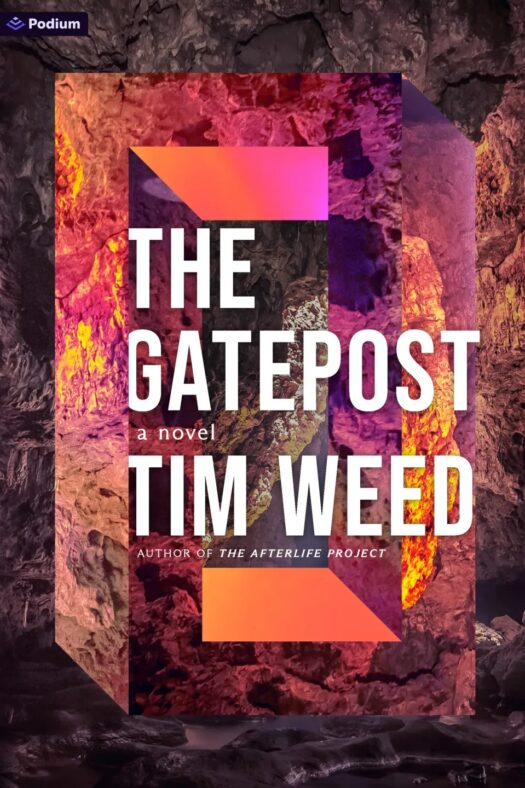
Tim Weed’s novel The Gatepost combines literary suspense, speculative fiction, and spiritual inquiry in a story that moves between contemporary Vermont and a mysterious alternate realm inspired by Mesoamerican mythology.
The novel follows Esme, a woman investigating the disappearance of her father, Gregory, an amateur archaeologist whose experiments with psilocybin mushrooms and an ancient Olmec stela may have opened a doorway into another world.
In our conversation, Weed discusses the influence of psychedelic researchers like Albert Hofmann and Gordon Wasson, as well as the Mesoamerican concept of the Inframundo, a hidden realm existing alongside ordinary reality. We talk about the intersection of science and spirituality in the novel, including the parallels Weed sees between ancient cosmologies and the “many worlds” interpretation of quantum physics.
Weed also reflects personally on his own experiences with psychedelics as a teenager and how those experiences shaped his imagination as a writer. He describes both the exhilaration and danger of altered states, stressing the seriousness and reverence with which traditional cultures approached entheogenic substances. The conversation explores how experiences of awe, ego dissolution, and interconnectedness influenced the novel’s vision of consciousness and love as a unifying force.
At its heart, The Gatepost is a novel about humanity’s relationship with nature and the stories we tell about our place in the world. Weed argues that modern society suffers from a collapse of shared mythology, and that literature can help imagine new paradigms rooted in stewardship rather than domination.
Farah Naz Rishi — The Flightless Birds of New Hope
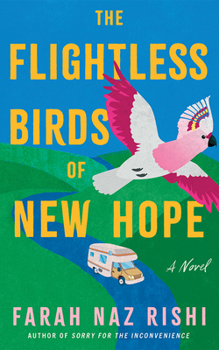
Farah Naz Rishi’s novel The Flightless Birds of New Hope begins with grief and a missing bird.
After the death of their parents, three estranged siblings, Aidan, Eliza, and Sami, are brought back together when the family cockatoo, Coco, escapes. What follows is a road trip story full of emotional reckoning, sharp humor, buried resentment, and hard-earned tenderness.
In our conversation, Rishi talks about how the novel emerged from her own experience of losing her younger brother. She describes grief as a kind of emotional paralysis, a feeling of being “flightless,” and explains how the novel became a way to explore anger, abandonment, love, and survival. The sibling dynamics are central to the story, especially the tensions between Aidan, the angry eldest brother, and Eliza, who feels abandoned after he leaves the family.
One of the novel’s most unusual and moving elements is Coco herself. Rishi explains why she chose to give the cockatoo her own perspective chapters, allowing the bird to become not just a symbol but a full participant in the family’s emotional life. We also talk about birding culture, community, and the generosity of strangers the siblings encounter on their journey.
The conversation also explores the novel’s blend of humor and heartbreak. Rishi reflects on the way grief and comedy coexist, and why imperfect healing felt truer than a neat resolution. In the end, the novel suggests that healing may begin simply with the willingness to keep moving together.