

Podcast: Play in new window | Download
Subscribe: Apple Podcasts | RSS
Writer’s Voice: compelling conversations with authors who challenge, inspire, and inform.
This week, Elizabeth Vartkessian joins me to discuss The Deserving: What the Lives of the Condemned Reveal About American Justice. Drawing on two decades as a mitigation specialist working with people facing the death penalty, she argues that America’s justice system reflects deeper failures in how we value human dignity, mercy, and opportunity.
“What I can do is everything possible to provide the context that people need to understand that my client is a person who has likely done a huge amount of harm that can’t be undone, but they are still a human being who is loved, who has potential, who has the capacity just like any other human being to grow, to change, to redeem.”
Then we revisit part of my 2020 conversation with Dr. Abdul El-Sayed, now a candidate for the U.S. Senate from Michigan. In Healing Politics, he describes what he calls America’s “epidemic of insecurity” and explains why he left medicine to tackle the social and political causes of illness itself.
“Medicine is a social science, and politics is nothing but medicine on a large scale.”
Follow us on Bluesky @writersvoice.bsky.social and subscribe to our Substack. Or find us on Instagram @WritersVoicePodcast.
Tags: Elizabeth Vartkessian, The Deserving, death penalty, capital punishment, criminal justice, mitigation specialist, prison system, restorative justice, Abdul El-Sayed, Healing Politics, public health, healthcare inequality, Writer’s Voice podcast
You May Also Like: Abdul EL Sayed, HEALING POLITICS, Stephanie Canizales, SIN PADRES NI PAPELES
Elizabeth Vartkessian, The Deserving
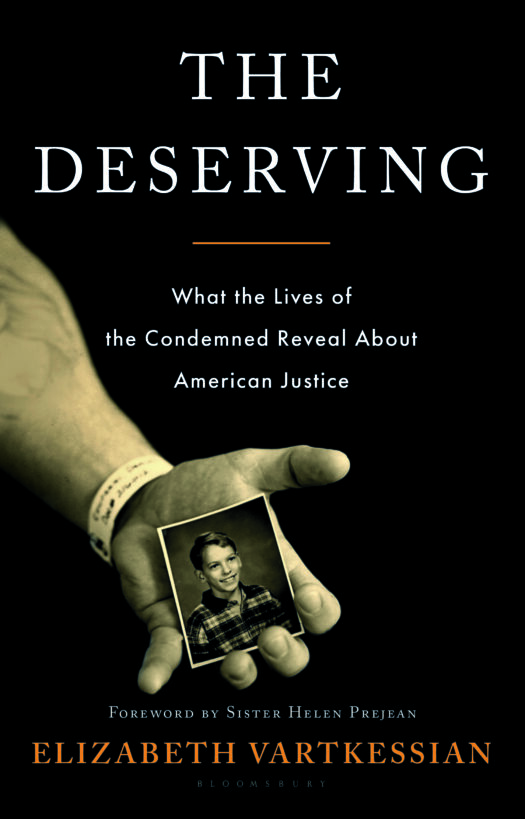
Elizabeth Vartkessian has spent more than two decades working as a mitigation specialist for people facing the death penalty.
In The Deserving, she brings readers inside a rarely seen part of the American legal system, investigating the lives of people condemned to die and the social conditions that shaped them long before they entered a courtroom.
In our conversation, Vartkessian explains what mitigation work actually involves. She investigates the life histories of defendants, tracing patterns of childhood abuse, poverty, trauma, addiction, racism, and systemic neglect. Rather than excusing violent acts, she argues that understanding the full human context behind them is essential if justice is to mean anything more than punishment.
We talk in depth about one of her early clients, “Edward,” who was sentenced to death after a robbery gone wrong when he was barely eighteen years old. Through Edward’s story, Vartkessian explores how violence often begins long before a crime itself, in homes and communities shaped by desperation and neglect.
She also discusses the deeply flawed mechanics of the death penalty system itself, from ineffective defense counsel to “death-qualified” juries that are predisposed toward conviction and execution.
The conversation ultimately becomes a larger meditation on mercy, dignity, and the meaning of justice in America. Vartkessian argues that the death penalty neither deters violence nor creates public safety, and instead reflects a society willing to decide that some people are beyond redemption.
Abdul El Sayed, Healing Politics
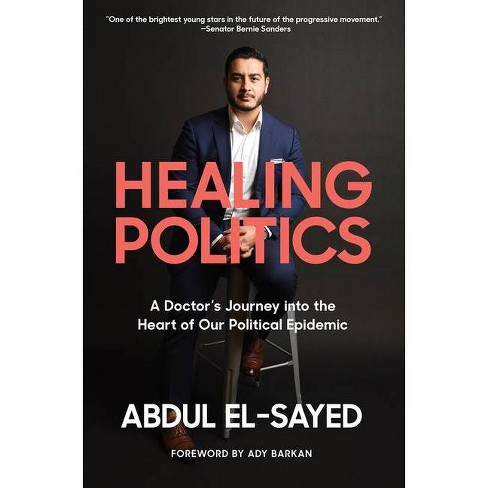
In this excerpt from our 2020 interview, Abdul El-Sayed argues that America faces not just a healthcare crisis, but what he calls an “epidemic of insecurity.”
Drawing on his training as both a physician and epidemiologist, he describes how collapsing systems of healthcare, housing, employment, and politics leave millions of Americans struggling with chronic instability and fear.
El-Sayed explains how his understanding of public health evolved beyond traditional medicine into what he calls a systems approach, recognizing that disease is shaped not only by biology, but by racism, poverty, environmental exposure, political power, and economic inequality. He illustrates this through his former work as director of the Detroit Health Department, where industrial pollution, asthma, COVID-19, and racial disparities all intersected in the same communities.
The conversation also turns deeply personal. El-Sayed recounts the patient encounter that changed the course of his life, leading him to leave clinical medicine behind in order to address the systemic causes of illness itself. He reflects on water shutoffs in Detroit, the Flint lead crisis, and the failure of political institutions to protect public health.
At its core, Healing Politics argues that healing requires more than medical care. It requires rebuilding social systems that allow people to live with dignity, security, and democratic power.