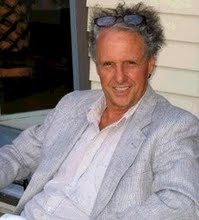
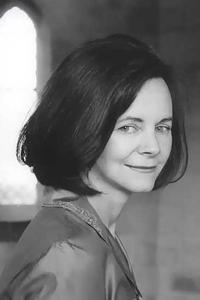
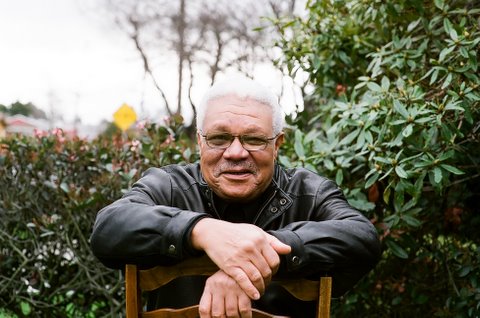
Francesca interviews novelist Elizabeth Strout about her Pulitzer Prize winning book, OLIVE KITTERIDGE, which uses a collection of short stories to create a novel about the inhabitants of a coastal town in Maine. And Adam Mansbach talks about his new novel, THE END OF JEWS. Continue reading →
The news today about a possible war impending between Georgia and Russia is prefigured in our first interview: host Francesca Rheannon talks with energy security expert Michael Klare about the dangerous new global order of energy politics — winners and losers, flashpoints of conflict, and what it means for democracy and the environment. His book is RISING POWERS, SHRINKING PLANET: The New Geopolitics of Energy. In our conversation Klare notes that Georgia could the the flashpoint not only of war between Russia and Georgia–but between Russia and the United States.
Also, New York Times reporter Eric Lichtblau broke the story on warrantless domestic spying. His book is BUSH’S LAW: The Remaking of American Justice.
Host Francesca Rheannon talks with Nicholson Baker about his acclaimed new book, [amazon-product text=”HUMAN SMOKE: The Beginnings of World War II; The End of Civilization” type=”text”]1416567844[/amazon-product].
In a departure from his usual genre, fiction, Baker turns his eye for telling detail to an examination of the cavalier disregard for the human consequences of war by leaders on all sides of the conflict. We hear about how Churchill’s warmongering and Roosevelt’s anti-Semitism exacerbated the war’s civilian toll. We also hear of the courage of a few who dared to speak against the headlong rush to battle.
Also, we air an excerpt from our 2006 interview with Pulitzer Prize-winning poet, Maxine Kumin.
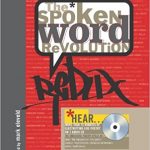
Hip-hop, poetry slams, and more: it’s the SPOKEN WORD REVOLUTION REDUX. We talk with editor Mark Eleveld about poetry in performance and hear cuts off the CD accompanying the book.
In March of 2008, Writer’s Voice host went to the Nieman Foundation’s Conference on Narrative Journalism. In this show segment, we talk with Nieman narrative program director Connie Hale about what “narrative journalism” is all about.
Our theme is cultural decline and what to do about it. We talk with cultural critic Susan Jacoby about THE AGE OF AMERICAN UNREASON. And former New Republic editor and author Lee Siegel talks about the unintended consequences of the digital age. His book is AGAINST THE MACHINE: Being Human in the Age of the Electronic Mob. Continue reading →
We talk with biographer Philip Fradkin about the life of Wallace Stegner, writer and environmentalist extraordinaire. His book is WALLACE STEGNER AND THE AMERICAN WEST.
You can read a New York Times review of Fradkin’s book (which says a lot more about Stegner than about the biography) here. And for the first chapter, go here.
Also, urban geographer Rutherford Platt tells us about how to make cities that are sustainable and a pleasure to live in. Editor of the THE HUMANE METROPOLIS, he’s the founder of the Ecological Cities
Project at the University of Massachusetts, Amherst.
April is Poetry Month and we enter it by talking with editor Rebekah Presson Mosby about a new edition of a much-hailed anthology from Sourcebooks Press. It’s called POETRY SPEAKS EXPANDED.
Also, artist Amy Fagin and filmmaker David Edwards who will be showing their work at the Pioneer Valley Jewish Film Festival on Tuesday, April 1.
Fagin’s illuminated book project, BEYOND GENOCIDE, honors peoples who have been genocide’s victims, past and present. Edwards’ film, Kabul Transit, gives a sensitive portrait of Afghanistan under occupation.
Greg Palast, investigative reporter for the BBC, tells us why he thinks the Eliot Spitzer scandal broke when it did — and what federal prosecutors were trying to keep hidden from the public about the bank bailout by taking Spitzer down.
Then we go to the Nieman Foundation’s Conference on Narrative Journalism. We talk with broadcast and print journalist John Hockenberry about interactive media, BU journalism department chair Louis Ureneck about memoir, and Nieman narrative program director Connie Hale about what “narrative journalism” is all about.
We talk with biofeedback pioneer Les Fehmi about how to focus the mind and improve productivity and mood. His book is THE OPEN FOCUS BRAIN: Harnessing the Power of Attention to Heal Mind and Body. The book comes with an instructional CD to put the method into practice.
Also, what are the societal roots of depression? How can we use community-building to overcome the disease? We hear from psychiatrist Bruce Levine about SURVIVING AMERICA’S DEPRESSION EPIDEMIC: How to Find Morale, Energy, and Community in a World Gone Crazy.
We talk with historian Eric Weitz about [amazon-product text=”WEIMAR GERMANY: Promise and Tragedy” type=”text”]0691140960[/amazon-product]. On the one side, there was Bauhaus, Expressionism, Magnus Hirschfeld and new freedom for gays and women, a vital and experimental theater–in short, an explosion of intellectual and artistic creativity. On the other: hyperinflation, economic depression, and bullies of the left and right rampaging in the streets, setting the stage for the Nazi seizure of power in 1933.
We explore both sides of Weimar Germany and what lessons it may hold for us today.
Also, a preview of Spring…we listen to robins and other birds with renowned bird biologist Donald Kroodsma, author of [amazon-product text=”The Singing Life of Birds: The Art and Science of Listening to Birdsong” type=”text”]0618840761[/amazon-product].
We talk with John Elder Robison about his memoir, [amazon-product text=”Look Me in the Eye: My Life with Aspergers” type=”text”]0307396185[/amazon-product]. Brother to best-selling author Augusten Burroughs (RUNNING WITH SCISSORS), Robison has written a sweet, compelling tale about growing up with Asperger’s Syndrome, a high-functioning form of autism. From the inside, he reveals what it’s like to be a misfit, the savant-like talents he feels Asperger’s gave him, and how he overcame the condition’s deficits and celebrated its gifts.
Abijah Prince was born into slavery in the early 17th century in Springfield, Massachusetts, but in middle age, he arranged his own freedom and married (and freed) the dynamic and eloquent Lucy Terry of the nearby town of Deerfield. Against incredible odds, the couple became property-owners and respectable members of the largely white community in which they lived. When author Gretchen Holbrook Gerzina began to follow the legend of the Princes, she was astonished to find that her own ancestors were part of the story. As she unraveled fact from fiction, Gerzina began to realize she was uniquely suited to bring the real history of this extraordinary couple to light. Her book is MR. AND MRS. PRINCE: How An Extraordinary Eighteenth-Century Family Moved Out of Slavery and Into Legend.
Also, when we think of slavery in the U.S., most of us think about the South. But as Anne Farrow, Joel Lang, and Jenifer Frank demonstrate in COMPLICITY, the North promoted and profited from that “peculiar institution”. All journalists with the Hartford Courant Farrow, Frank and Lang drew from from long-ignored documents to create a fascinating and sobering work that uncovers this lesser-known aspect of the history of American slavery.
And we hear an excerpt from a longer archived interview with writer Patricia Klindienst, author of THE EARTH KNOWS MY NAME: Food, Culture, and Sustainability in the Gardens of Ethnic America. She tells us about about the traditional gardens brought by African slaves whose descendants became the Gullah people of the South Carolina Sea Islands.
Finally, award-winning poet Lynn Thompson reads “Grenadine”, a poem about her West Indian ancestors from BEG NO PARDON.
As a physician, Kevin Patterson treats Inuit communities of the Canadian Arctic. As a novelist, he explores the collision between the old and the new in that region.
His debut novel [amazon-product text=”CONSUMPTION” type=”text”]0307278948[/amazon-product] richly details the life of the Inuit as they transition from traditional nomadic life to settlement in towns built for them by the Canadian government. It tells the story of one family across three generations as its members make this transition, the uneasy peace they make with modern society, and the connections and tensions between them and the Kablunuks— or whites — who come to work in the Arctic.
Also, John Hanson Mitchell tells us about his search to solve the mystery surrounding the African American servant of a famous 19th century ornithologist. It’s the subject of his 2005 book, [amazon-product text=”Looking for Mr. Gilbert: The Reimagined Life of an African American” type=”text”]1593760264[/amazon-product].
When Mitchell found more than two thousand antique glass plate negatives in the attic of an old estate in Massachusetts, he thought at first they had been created by ornithologist William Brewster, a Boston Brahmin of the highest rank. But then, Mitchell began to have questions. They led him on a journey to uncover the history of the man who may very well have been the first major wildlife photographer, a little-known African American named Robert Alexander Gilbert.
Geraldine Brooks tells us about [amazon-product text=”PEOPLE OF THE BOOK” type=”text”]0143115006[/amazon-product], a novel based on the history of the Sarajevo Haggadah. This remarkable novel takes us through time and across Europe to uncover the story of a fourteenth century Jewish book that survived the exile, wanderings and persecution of its owners. One of the most valuable manuscripts in existence today, the Sarajevo Haggadah was rescued twice by its Bosnian Muslim curators — from the Nazis in 1944 and from Serbian shelling of Sarajevo in the early 1990’s. It now rests in the National Museum of Bosnia and Herzegovina in Sarajevo.
Also, we talk with California Poet Laureate Al Young about his new book-and-cd set, [amazon-product text=”SOMETHING ABOUT THE BLUES: An Unlikely Collection of Poetry” type=”text”]1402210647[/amazon-product]. Young is a celebrated African-American poet, novelist, essayist and musician who connects his poetry with the vibrant music of the Blues. He writes: “Music — with which poetry remains eternally intimate — seems a dead ringer, as it were for life. And while each also seems invisible, I always catch myself asking: What is life but spirit; spirit-thought made hearable, seeable, smellable, touchable, and delectable?”.