Monthly Archives: July 2026

Podcast

Ada Ferrer on Keeper of My Kin + T.J. English on Havana 

Writer’s Voice: compelling conversations with authors who challenge, inspire, and inform.

The Cuban Revolution transformed a nation. It also ended the Mob’s dream of turning Havana into the center of a global criminal empire. And it divided families.

This post is temporarily unable to display the player. To listen to the episode, listen on PRX.

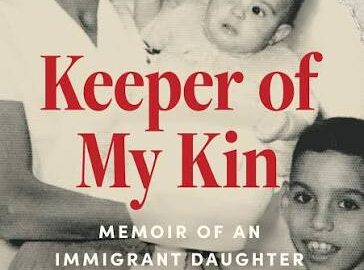
Writer’s Voice talks with Cuban American historian Ada Ferrer about her memoir, Keeper of My Kin. When Ferrer was ten months old, her mother carried her out of Cuba without saying goodbye to Ferrer’s nine-year-old half-brother, Poli. The separation was supposed to be temporary. It lasted seventeen years.

“We tend to think that history happens up here or something, but all these historical events, their geopolitical decisions, they reverberate in individual lives, at the heart of families, in these really intimate spaces, in the space between people, family members who are separated, right?” Ada Ferrer

After Poli finally joined the family through the Mariel boat lift, the wounded child Ferrer had imagined became a volatile and sometimes violent man. Years later, a bundle of his childhood letters helped her understand what the separation had cost him. Ferrer discusses immigration, exile, family memory, and the ways geopolitical decisions reverberate through intimate lives.

Then Writer’s Voice returns to a 2008 interview with journalist T.J. English about Havana Nocturne: How the Mob Owned Cuba and Then Lost It to the Revolution. English describes how Meyer Lansky and other American mobsters allied themselves with dictator Fulgencio Batista, turning Havana into a glittering marketplace of casinos, nightclubs, prostitution, political corruption, and corporate profit.

“In that period, Havana became a kind of a paradise, a mobster’s paradise.” T.J.English

The Mob hoped Cuba would become the base of a multinational empire. Instead, its exploitation of the island became a powerful symbol for the revolution that swept Batista and the gangsters from power.

Follow us on Bluesky @writersvoice.bsky.social and subscribe to our Substack. Or find us on Instagram @WritersVoicePodcast.

Love good coffee? Want to support Writer’s Voice? Head on over to Larry’s Coffee using this LINK, and you’ll earn $30 for the show!

[Episode 1035]

Tags: Keeper of My Kin, Ada Ferrer, T.J. English, Havana Nocturne, Cuban Revolution, Cuba, Cuban history, Cuban exile, Cuban immigration, Mariel boatlift, Mafia in Cuba, Meyer Lansky, Fulgencio Batista, Fidel Castro, Writer’s Voice, Francesca Rheannon,

You might also like: T. J. English, THE CORPORATION & HAVANA NOCTURNE, Katherine Paterson, MY BRIGADISTA YEAR

Read The Transcript

Continue reading

Podcast

Noam Scheiber on the Mutiny of the New Working Class

Writer’s Voice: compelling conversations with authors who challenge, inspire, and inform.

Economic insecurity is reshaping America’s workforce. Will that bring college-educated and non-college educated workers together?

For decades, Americans were told that education was the pathway to the middle class. Get a degree, work hard, and professional success would follow. But that promise has weakened.

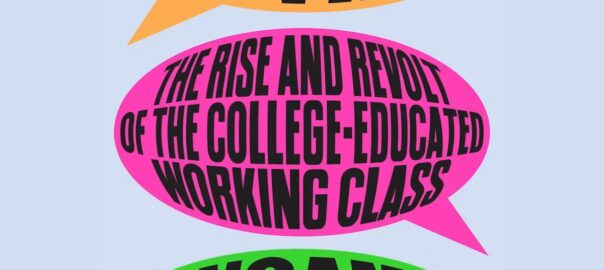
In Mutiny: The Rise and Revolt of the College-Educated Working Class, New York Times reporter Noam Scheiber argues that millions of college graduates increasingly face the same insecurity that has long confronted blue-collar workers. They carry heavy student debt, struggle to find stable careers, and often discover that professional jobs offer less autonomy and dignity than previous generations enjoyed.

Writer’s Voice talks with Scheiber about the organizing drives at Starbucks, Apple, Amazon, and among Hollywood writers, along with the changing realities facing doctors, graduate students, and other professionals. He explains why so many workers who once imagined themselves as future managers or professionals are instead embracing unions and collective action.

The conversation explores how corporate restructuring, the aftermath of the Great Recession, streaming media, and artificial intelligence are reshaping work across industries. Scheiber argues that the traditional divide between college-educated and non-college-educated workers is narrowing as economic precarity spreads throughout the labor force.

The result, he suggests, may be a new politics of work, one in which people who once saw themselves as members of different social classes increasingly recognize common interests.

Follow us on Bluesky @writersvoice.bsky.social and subscribe to our Substack. Or find us on Instagram @WritersVoicePodcast.

Love good coffee? Want to support Writer’s Voice? Head on over to Larry’s Coffee using this LINK, and you’ll earn $30 for the show!

Tags: Noam Scheiber, Mutiny, Starbucks Workers United, Amazon Labor Union, Apple union, Hollywood writers strike, college graduates, economic inequality, AI and work, worker organizing, precarity, corporate power, Writer’s Voice podcast

You might also like: Maria Adelmann on Adjunct Labor, Cory Doctorow on Big Tech’s “Enshittification”

Read the Transcript

Continue reading

Podcast

How to Be a Dissident, Lessons from Resistance Then and Now

Writer’s Voice: compelling conversations with authors who challenge, inspire, and inform.

What does courage demand when freedom is threatened?

This week on Writer’s Voice, two conversations ask one of the hardest questions any of us can face. What does it really mean to resist?

First, journalist Gal Beckerman joins Writer’s Voice to talk about his book How to Be a Dissident. Drawing on figures from Hannah Arendt to Alexei Navalny, Osip Mandelstam and Etty Hillesum, he argues that dissidents aren’t superheroes. They’re ordinary people who decide they can no longer live with inaction.

“I really have come to understand those choices as not only burdensome, but actually the substance from which a real meaningful life is made.”

Then Writer’s Voice revisits a conversation with novelist Buzzy Jackson about To Die Beautiful, her novel inspired by Dutch resistance fighter Hannie Schaft. Through Schaft’s story, Jackson explores how ordinary people become extraordinary when injustice closes in, and why even for any of us, small acts of courage matter.

“I really started to understand that a refugee crisis in a country is a little bit of like a canary in a coal mine.”

Two conversations, one enduring question. How do we prepare ourselves to choose courage when the moment arrives?

Follow us on Bluesky @writersvoice.bsky.social and subscribe to our Substack. Or find us on Instagram @WritersVoicePodcast.

Tags: How to Be a Dissident, Gal Beckerman interview, Writer’s Voice podcast, Hannie Schaft, To Die Beautiful, Dutch Resistance, World War II resistance, Alexei Navalny, Hannah Arendt, Osip Mandelstam, Etty Hillesum, Buzzy Jackson interview,

You might also like: Buzzy Jackson, TO DIE BEAUTIFUL, Robert Matzen, DUTCH GIRL

Love good coffee? Want to support Writer’s Voice? Head on over to Larry’s Coffee using this LINK, and you’ll earn $30 for the show!

Continue reading

Podcast

Patriotism Redefined: The Moral Legacy of Bates and Adams

Writer’s Voice: compelling conversations with authors who challenge, inspire, and inform.

Patriotism demands more than pride, it demands moral courage.

This Independence Day episode of Writer’s Voice explores two remarkable women who believed loving America meant challenging it to live up to its highest ideals.

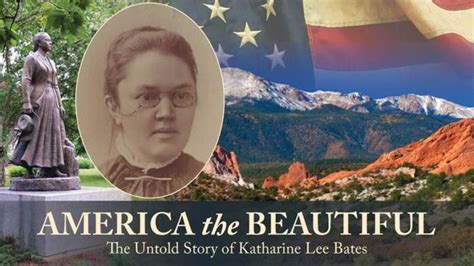
First, filmmaker, author and activist John de Graaf discusses From Sea to Shining Sea, his documentary about Katharine Lee Bates, author of America the Beautiful. Far from writing a triumphal anthem, Bates created what de Graaf calls a patriotic prayer, a vision of a nation grounded in justice, equality, stewardship of the land, and compassion for all.

“She saw it as a country filled with flaws but with great promise that she wanted to reform.” — John de Graaf

Then novelists Stephanie Dray and Laura Kamoie talk about A Founding Mother, their richly researched novel told in the voice of Abigail Adams.

Drawing from her letters and historical record, they reveal a woman whose intelligence, independence, and moral clarity shaped both her family and the new republic. Abigail advocated for women’s rights, condemned slavery, built financial independence through her own business ventures, and understood that democracy depends on the participation of every generation.

Together, these conversations remind us that “a more perfect union” was never a description of America. It was, and remains, an aspiration. Katharine Lee Bates and Abigail Adams each understood that patriotism isn’t blind celebration. It’s the willingness to participate fully in the project to create an America that works for all, not just the one percent.

Watch From Sea To Shining Sea

Follow us on Bluesky @writersvoice.bsky.social and subscribe to our Substack. Or find us on Instagram @WritersVoicePodcast.

Tags: America the Beautiful, Katharine Lee Bates, John de Graaf, From Sea to Shining Sea, Abigail Adams, Stephanie Dray, Laura Kamoie, A Founding Mother, American history podcast, Fourth of July, American Revolution, women founders, slavery, historical fiction, Writer’s Voice podcast

You might also like: Stewart Udall and The Politics of Beauty with John de Graaf, What’s An Economy For, Anyway?

Love good coffee? Want to support Writer’s Voice? Head on over to Larry’s Coffee using this LINK, and you’ll earn $30 for the show!

Continue reading