
Podcast: Play in new window | Download
Subscribe: Apple Podcasts | RSS
Writer’s Voice: compelling conversations with authors who challenge, inspire, and inform.
Who gets to be free?
We talk with Zinzi Clemmons about Freedom, her essay collection on what it means to be free. She tells me what she learned after her mother died about her work as a student activist against apartheid in South Africa, and how that history changed her understanding of the woman who raised her.
And at the risk of being reductive, you know, I think that’s the question that we’re all being forced to reckon with in this moment is, who is the we in America? — Zinzi Clemmons
In her essay “Chasing Robbie,” the unsolved murder of a childhood friend leads Clemmons to investigate school and housing segregation in Pennsylvania. We also talk about her hopes for Barack Obama’s presidency, how living in the Catskills changed her thinking about race and class, and why she puts her faith in the steady work of organizing. Running through it all is a question about who gets included when we say “we.”
Follow us on Bluesky @writersvoice.bsky.social and subscribe to our Substack. Or find us on Instagram @WritersVoicePodcast.
Love good coffee? Want to support Writer’s Voice? Head on over to Larry’s Coffee using this LINK, and you’ll earn $30 for the show!
You might also like: Danielle Allen, Our Declaration, Dignity or Survival? Two Writers Confront Freedom Under Pressure
Tags: Zinzi Clemmons Freedom, Zinzi Clemmons interview, Writer’s Voice, anti-apartheid activism, Orlando Patterson, school segregation, race and class, racial capitalism, Writer’s Voice, Francesca Rheannon
Zinzi Clemmons on Freedom
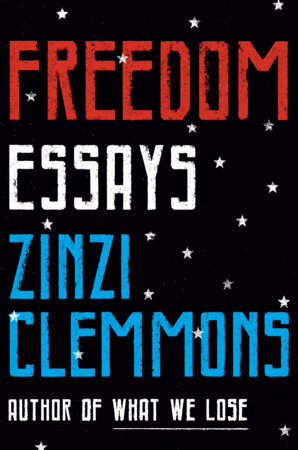
Zinzi Clemmons tells us how her mother’s anti-apartheid activism shaped the way she thinks about freedom.
In her collection’s title essay, Clemmons reflects on her mother’s death alongside the death of Nelson Mandela. She tells us how learning about the risks her mother took as a student activist helped her understand the protectiveness she’d experienced growing up.
We also discuss sociologist Orlando Patterson’s work on how enslaved people understood and articulated freedom.
In “Chasing Robbie,” Clemmons writes about a childhood friend who returned to Chester, Pennsylvania, after college to work in a high school. After he was shot and killed, she interviewed former classmates and looked into how school district boundaries, housing restrictions, and white flight shaped opportunities in Chester and nearby suburbs. With Robbie’s murder still unsolved, I ask her what it would mean to hold on to both justice and mercy.
We also talk about the lift she felt when Barack Obama was elected, the disappointment that followed, and how living among poor white neighbors in the Catskills pushed her to rethink the relationship between race and class. We close with her thoughts on what years of organizing can make possible when a political opening comes.