
Podcast: Play in new window | Download
Subscribe: Apple Podcasts | RSS
Writer’s Voice: compelling conversations with authors who challenge, inspire, and inform.
The stories we tell can change how we live.
This week on Writer’s Voice, a novel about what happens when we lose our connection to the living systems that sustain us.
Songwriter and author Alex Woodard joins us to talk about Ordinary Soil, a multigenerational saga of a Choctaw farming family in the Oklahoma Panhandle that traces the intertwined health of land, food, and people across more than a century.
“The simplified message of this book is that you get out what you put in. And that goes for the dirt, that goes for your stomach, that goes for your mind, that goes for your spirit, that goes for everything.”
Then, we revisit our 2019 conversation conversation with environmental journalist Carey Gillam about her book The Monsanto Papers: Deadly Secrets, Corporate Corruption, and One Man’s Search for Justice. It’s about the groundbreaking case of school groundskeeper Lee Johnson—how he sued Monsanto and won.
Follow us on Bluesky @writersvoice.bsky.social and subscribe to our Substack. Or find us on Instagram @WritersVoicePodcast.
Tags: Alex Woodard, Ordinary Soil, regenerative agriculture, soil health, glyphosate, Roundup, Indigenous farming, environmental fiction, Carey Gillam, Monsanto
You might also like: Exposing Hidden Agendas: Will Potter on Factory Farm Secrecy, Carey Gillam, WHITEWASH

Love good coffee? Want to support Writer’s Voice? Head on over to Larry’s Coffee using this LINK, and you’ll earn $30 for the show!
Alex Woodard, ORDINARY SOIL
Alex Woodard’s Ordinary Soil follows six generations of a Choctaw farming family living on the same Oklahoma Panhandle land from the late nineteenth century to the present. At its center is Jake, a struggling modern farmer whose physical and emotional health reflect the accumulated effects of generational trauma, environmental degradation, and the transformation of American agriculture.
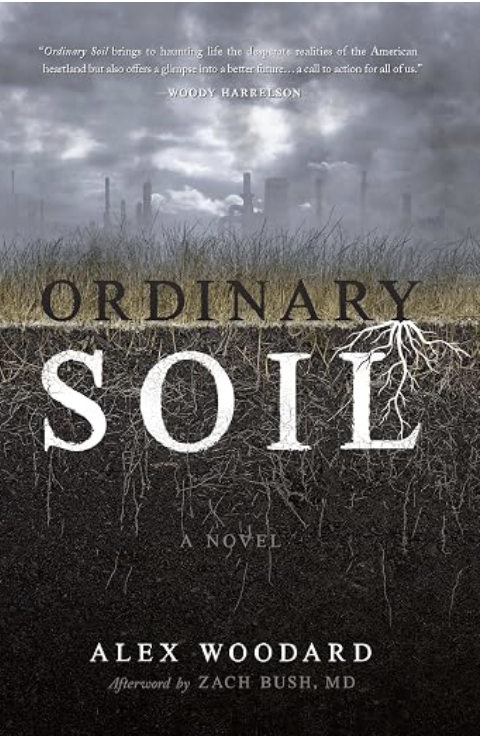
In our conversation, Woodard discusses the novel’s roots in both family history and contemporary concerns about industrial agriculture. The book contrasts Indigenous farming traditions, particularly the “Three Sisters” method of planting corn, beans, and squash together, with the rise of chemical-intensive monoculture farming. Through the family’s story, Woodard explores how changes in the soil affect not only ecosystems but human health as well.
We also talk about glyphosate, gut health, regenerative agriculture, and the growing scientific understanding of epigenetics. The novel suggests that both physical and emotional trauma can accumulate across generations, shaping the lives of descendants long after the original wounds occurred. At the same time, Woodard emphasizes that healing is possible, for individuals, communities, and the land itself.