
Podcast: Play in new window | Download
Subscribe: Apple Podcasts | RSS
Writer’s Voice: compelling conversations with authors who challenge, inspire, and inform.
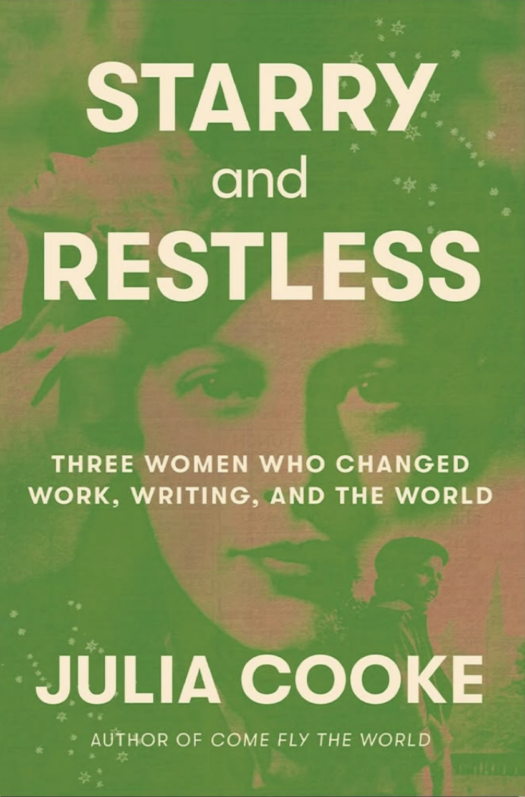
In this episode of Writer’s Voice, Julia Cooke discusses Starry and Restless, her group biography of Rebecca West, Martha Gellhorn, and Emily “Mickey” Hahn—women journalists whose restless lives and innovative writing helped shape modern literary journalism, even as their contributions were later minimized.
“Women have been central to voice-driven narrative journalism for at least the last century and a half.”
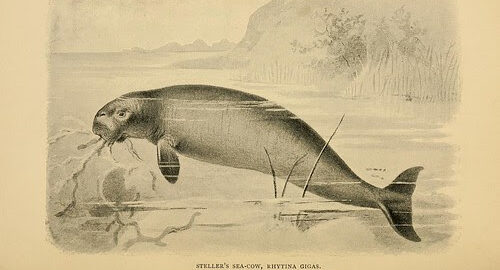
Then, Iida Turpeinen explores extinction, empire, and the ethics of science in her novel Beasts of the Sea, beginning with the tragic story of the Steller’s sea cow and expanding into a meditation on memory, loss, and the human relationship to the natural world.
“They had no idea that species can go extinct.”
Follow us on Bluesky @writersvoice.bsky.social and subscribe to our Substack. Or find us on Instagram @WritersVoicePodcast.
Tags: women journalists, literary journalism history, Rebecca West, Martha Gellhorn, Emily Hahn, Julia Cooke interview, Beasts of the Sea novel, Iida Turpeinen interview, extinction history, Steller sea cow, women in science history, Writer’s Voice podcast
You Might Also Like: Eiren Caffall, ALL THE WATER IN THE WORLD, Ellen Ruppel, SLIPPERY BEAST
Segment One: Julia Cooke – Starry and Restless
Julia Cooke reexamines the legacy of three pioneering women journalists—Rebecca West, Martha Gellhorn, and Emily Hahn—arguing that women were not peripheral but central to the development of literary journalism.
Cooke explores how constraints placed on women—barred from war fronts, dismissed as “sob sisters”—actually pushed them to innovate, expanding the scope of reporting to include domestic life, civilian experience, and overlooked voices. Their work challenged conventional ideas of objectivity, incorporating first-person perspective and a broader understanding of who counts as a subject.
The conversation also traces the tension between ambition and domestic life, the role of restlessness as both personal drive and cultural force, and the ways these writers navigated financial, professional, and social barriers.
Segment Two: Iida Turpeinen – Beasts of the Sea
Iida Turpeinen discusses her novel centered on the Steller’s sea cow, a massive Arctic animal driven to extinction within decades of its discovery in the 18th century.
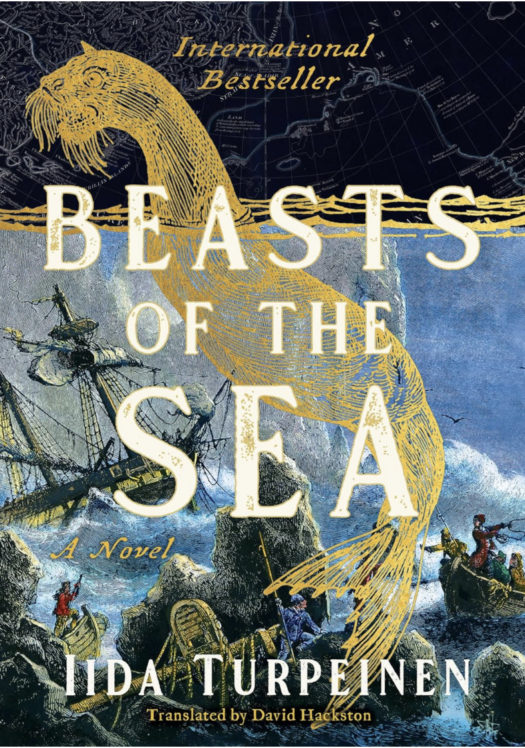
The novel begins with a museum skeleton—an entry point into questions of memory, loss, and scientific history. Turpeinen examines how imperial expansion, scientific inquiry, and extraction were deeply intertwined, and how early naturalists lacked even the concept of extinction.
She also introduces overlooked figures like Hilda Olsson, a 19th-century scientific illustrator whose work—once erased—has been rediscovered. Through her story, the novel contrasts modes of seeing: possession versus attention, extraction versus care.
At its heart, Beasts of the Sea is an elegy—and a call to remember the many species lost without notice.