

Podcast: Play in new window | Download
Subscribe: Apple Podcasts | RSS
Writer’s Voice: compelling conversations with authors who challenge, inspire, and inform.
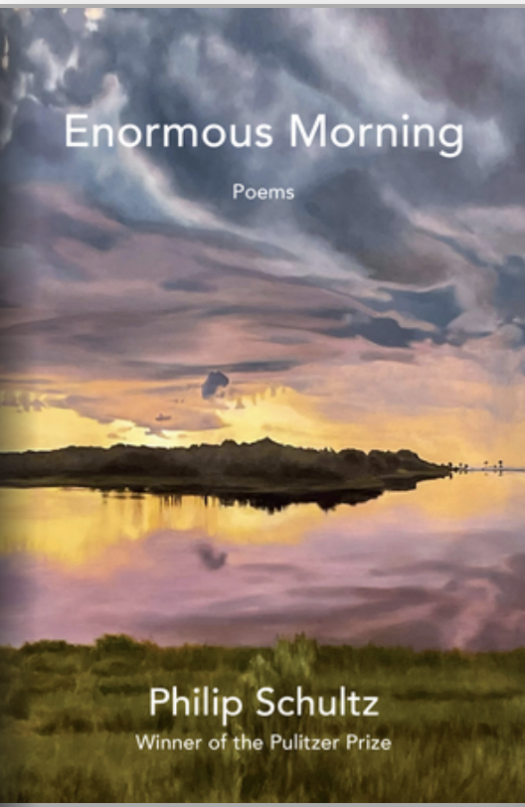
Pulitzer Prize–winning poet Philip Schultz joins Writer’s Voice to discuss his new collection, Enormous Morning. Writing from the vantage point of his 80th year, Schultz reflects on aging, memory, family, regret—and the possibility of transcendence.
“Age has… given me a kind of love of my life and the lives of others that I always didn’t have.”
In this conversation, Schultz explores how perspective changes over time, how poetry can transform suffering into insight, and why creativity itself can be a source of resilience and even joy. He also reads several poems from the collection, including “Enormous Morning,” “Good News,” and “My Mistakes.”
The conversation moves from the personal to the political, as Schultz reflects on democracy, moral courage, and the ethical questions raised by our current moment.
Follow us on Bluesky @writersvoice.bsky.social and subscribe to our Substack. Or find us on Instagram @WritersVoicePodcast.
Tags: Philip Schultz, Enormous Morning, poetry interview, contemporary poetry, Writer’s Voice podcast, Pulitzer Prize poet, American poets interview.
You Might Also Like: Philip Schultz, LUXURY, Philip Schultz, The Poet & His Dyslexia
Episode Summary: Philip Schultz
Philip Schultz is the Pulitzer Prize–winning author of Failure and one of America’s most distinctive contemporary poets. His work has long explored the inner life—its doubts, contradictions, and longings—with a rare mix of emotional honesty, philosophical depth, and, often, surprising humor.
Now, in his new collection, Enormous Morning, Schultz writes from a new vantage point: his 80th year. These poems take on aging, memory, family, and mortality—but also something else: renewal. The possibility of gaining a new, more joyous perspective on life
The book opens with a walk through a cemetery—yet what emerges is not just a meditation on death, but a vivid sense of continuity. The past and present coexist. The living and the dead are in conversation. And throughout the collection, Schultz moves from the particulars of daily life—a movie, a memory, a friendship—into larger questions about meaning, suffering, and what it means to live ethically in a troubled world.
We talk about how age changes perception, how poetry can transform regret into something like forgiveness, and how creativity itself can be a form of resilience—even joy.
We also talk about the political dimension of the book—poems that grapple with democracy, moral courage, and the unsettling forces shaping our current moment. For Schultz, poetry is not an escape from reality—it’s a way of entering it more deeply, asking harder questions.
As he puts it, writing a poem can be a way of confronting even the most difficult truths—and finding, if not answers, then a kind of clarity, or even transcendence.
About the Poet
Philip Schultz is the founder and director of the Writers Studio in New York. He is the author of numerous poetry collections, including the Pulitzer Prize–winning Failure, as well as The God of Loneliness: Selected and New Poems.
His work often explores personal history, family, and Jewish and immigrant experience, including his father’s struggles, which he addressed with striking honesty in Failure. He lives in East Hampton, New York, with his wife, sculptor Monica Banks.