

Podcast: Play in new window | Download
Subscribe: Apple Podcasts | RSS
Writer’s Voice: compelling conversations with authors who challenge, inspire, and inform.
On this episode of Writer’s Voice, we talk with novelist Justin C. Key about The Hospital at the End of the World, a gripping speculative story that explores the ethical and human stakes of AI in medicine.

“Technology is best when it’s a tool wielded by humans.”
Then, memory champion Nelson Dellis joins us to talk about Everyday Genius—and how ordinary people can train their minds for sharper memory, deeper focus, and far-reaching intuition.
“I never had a good memory growing up. It was something that I was inspired to change and learned all about it and really started to work on it about 15 years ago. And my mind has been different ever since.”
Two conversations that explore what the human mind can do — and what AI never will.
Read or Listen to A Sample from The Hospital At The End of the World
Follow us on Bluesky @writersvoice.bsky.social and subscribe to our Substack. Or find us on Instagram @WritersVoicePodcast.
Read The Transcript
Tags: AI ethics, AI in medicine, speculative fiction AI, human vs machine intelligence, physician patient relationship, memory techniques, memory palace, cognitive training, intuition, remote viewing, Writer’s Voice podcast, Nelson Dellis, Justin C. Key,
Segment One: Justin C. Key
What happens when artificial intelligence becomes more than a tool—and starts making decisions for us?
In this episode of Writer’s Voice, Justin C. Key’s gripping novel imagines a world where AI controls medicine, exposing the ethical and human stakes of technological dependence.
The Hospital At The End of the World is a speculative novel set in a near-future America where an AI corporation controls not only medicine but society at large. The story follows a young medical student forced to flee New York for a human-centered hospital in New Orleans—the last city resisting AI dominance.
Key explores the tension between machine efficiency and human intuition, the risks of technological dependency, and the political forces shaping how technology is used.
Segment Two: Nelson Dellis
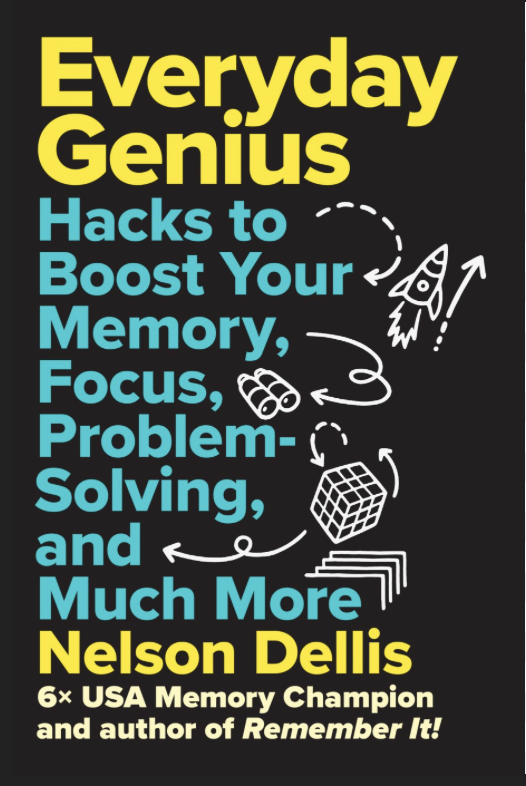
What if the reason you forget things has nothing to do with your memory — and everything to do with how you retrieve information?
Nelson Dellis, six-time USA Memory Champion and author of Everyday Genius, joins Writer’s Voice to explain how ordinary people can develop extraordinary mental skills.
Dellis — who grew up with no exceptional memory — began studying memory techniques 15 years ago and transformed his mind entirely.
In this conversation, he breaks down the ancient method of the memory palace, explains why multitasking is a myth built on dopamine, offers practical tricks for anyone who fears numbers, and describes his unexpected encounter with a classified government program that trained psychics to gather Cold War intelligence.
His book, Everyday Genius, covers memory, focus, number sense, creativity, decision-making, and intuition — making the case that every one of us has an inner genius waiting to be developed.