
Podcast: Play in new window | Download
Subscribe: Apple Podcasts | RSS
Writer’s Voice: compelling conversations with authors who challenge, inspire, and inform.
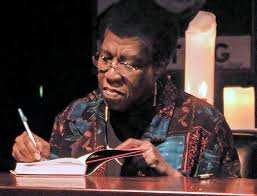
In this episode of Writer’s Voice, Francesca Rheannon speaks with Susana M. Morris, acclaimed scholar of Black feminist thought, about her new biography Positive Obsession: The Life and Times of Octavia E. Butler.
Drawing on interviews, archival materials, and Butler’s own journals, Morris shows how Butler’s discipline, political analysis, and upbringing shaped some of the most influential speculative fiction of our time.
“Now there is such a plethora of Black folk… writing science fiction and fantasy. It’s really exciting. And we have Octavia to thank for it.” — Susana Morris
The conversation covers Butler’s formative years; her neurodivergence and self-diagnosed dyslexia; her relationship with her mother; the creation of Kindred; and her prophetic insights into climate collapse, fascism, hierarchy, and the contradictions of American democracy.
Then, we air a clip from our 2012 interview with the late, great science fiction master, Ursula K. Le Guin.
Follow us on Bluesky @writersvoice.bsky.social and subscribe to our Substack. Or find us on Instagram @WritersVoicePodcast.
Key Words: Octavia Butler biography, Octavia Butler interview, Positive Obsession Susana Morris, Parable of the Sower prophecy, Black women writers, Afrofuturism, science fiction history, Black feminist literature, Francesca Rheannon interview,
You Might Also Like: Ursula K. Le Guin, THE UNREAL AND THE REAL, Cory Doctorow, THE LOST CAUSE.
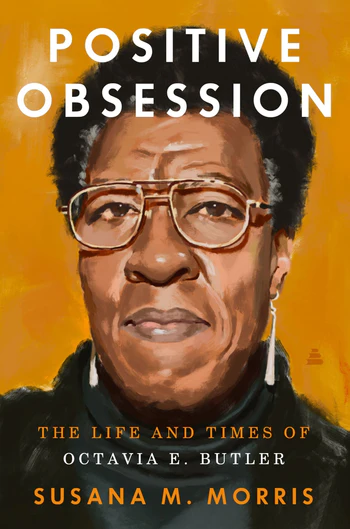
Main Segment: Susana Morris
Main Segment — Susana M. Morris on Positive Obsession
Morris reveals how Octavia Butler’s childhood experiences—especially witnessing the humiliating treatment of her mother, a domestic worker—shaped her lifelong political and creative vision.
She explains Butler’s “positive obsession,” the relentless work ethic that drove her writing; her rigorous research process; her early awareness of environmental crisis; and her pattern recognition around racism, patriarchy, and authoritarianism.
Morris also situates Butler within the Black women’s literary renaissance alongside Toni Morrison, Audre Lorde, Toni Cade Bambara, and others, while emphasizing Butler’s singular contributions to speculative fiction and Afrofuturism.
Key Topics
- Butler’s “positive obsession” and writing discipline
- Neurodivergence and self-diagnosed dyslexia
- Racism, patriarchy, and the politics embedded in Butler’s fiction
- The making of Kindred
- Butler’s prescient insights into climate crisis and authoritarianism
- Black women’s literary renaissance
- Afrofuturism, legacy, and influence on contemporary writers
- Speculative fiction as social and political critique
- Butler’s research methodology and fieldwork
- The human contradiction: intelligence vs. hierarchy