
Podcast: Play in new window | Download
Subscribe: Apple Podcasts | RSS
Writer’s Voice: compelling conversations with authors who challenge, inspire, and inform.
In this, our 1,000th episode of Writer’s Voice, Francesca Rheannon interviews Julian Brave Noisecat about We Survived the Night, his memoir weaving Indigenous oral traditions, personal narrative, political history, and environmental insight.
Noisecat explores Coyote stories, the legacy of residential schools, intergenerational trauma, mixed-race identity, the meaning of home, Indigenous political traditions, and the contemporary struggle for land, water, and cultural continuity.
“The text itself is a woven narrative that combines different elements of nonfiction to put these different kinds of truths and storytelling in conversation with each other.”
Through humor, grief, myth, and investigative rigor, Noisecat reframes Indigenous storytelling as nonfiction — a mode of truth that Western traditions have long dismissed. This conversation highlights the power of indigenous stories to resist erasure, illuminate political histories, and recover cultural knowledge.
Follow us on Bluesky @writersvoice.bsky.social and subscribe to our Substack. Or find us on Instagram @WritersVoicePodcast.
Key Words: Julian Brave Noisecat interview, We Survived the Night, Indigenous memoir, Coyote stories, residential schools history, Native American literature, intergenerational trauma, Indigenous resurgence, Salish culture, environmental justice Indigenous communities, land dispossession history,
You Might Also Like: Rebecca Nagle, BY THE FIRE WE CARRY, Tyson Yunkaporta, SAND TALK
Read the Transcript
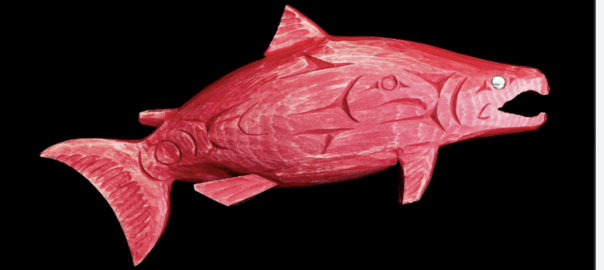
[top image: carving by Ed Archie Noisecat]
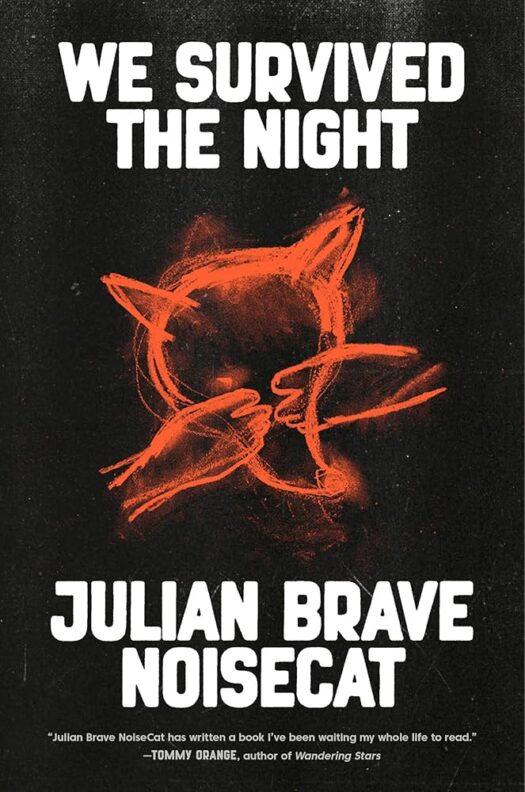
SEGMENT SUMMARY
Francesca speaks with Julian Brave Noisecat about his memoir/history We Survived the Night, structured around a four-day fasting tradition and infused with the oral-literary lineage of Coyote stories. Noisecat discusses his father’s birth at a residential school, the silence around Indigenous trauma, his family’s weaving traditions, and how Coyote mythology offers a language for understanding survival, contradiction, and the men in his family.
He describes the interconnection between land and people in Salish languages; the role of urban Native communities in activism; the Indigenous resurgence of the late 20th century; traditional ecological knowledge; and political tensions over fisheries, pipelines, and Arctic development. He also reflects on the personal: alcoholism, relationships, mixed-race identity, and the role of his mother in keeping him connected to his community.
KEY TOPICS
- Indigenous oral traditions as nonfiction
- Coyote as ancestral, literary, and allegorical figure
- Residential schools, unmarked graves, cultural genocide
- Intergenerational trauma and family silence
- Mixed-race identity and kinship
- The meaning of home for Native people
- Indigenous political history and contemporary power
- Environmental stewardship and fisheries
- Colonization as an ongoing structure
- Survival, continuity, and cultural resurgence