
Podcast: Play in new window | Download
Subscribe: Apple Podcasts | RSS
Writer’s Voice: compelling conversations with authors who challenge, inspire, and inform.
This week on Writer’s Voice, two authors explore fascinating episodes from women’s history—stories of bold individuals who challenged the boundaries of power, speech, and social convention.
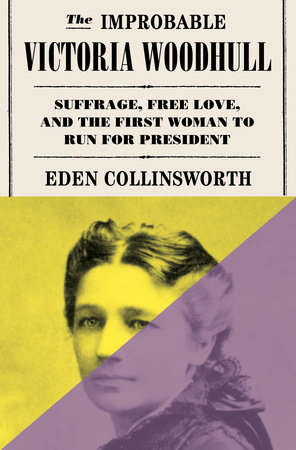
Journalist Eden Collinsworth discusses The Improbable Mrs. Woodhull, her biography of Victoria Woodhull—an astonishing figure who rose from poverty to become a stockbroker, newspaper publisher, and the first woman to run for President of the United States in 1872.
“I, like you and most Americans, knew nothing of her.”
Then novelist Shelley Noble joins us to talk about The Sisters of Book Row, a historical novel set in 1915 New York during Anthony Comstock’s aggressive crusade against books and information he deemed “obscene.” Noble’s story centers on three sisters running a bookstore in Manhattan’s famous Book Row, where booksellers faced censorship, raids, and the threat of imprisonment.
“My thing as an author is to find those little niches of people who actually make history that we should know about, but we very often don’t know about.”
Together, these conversations illuminate forgotten histories about the power of books and the struggle for women’s rights.
Read or Listen to A Sample from The Improbable Victoria Woodhull
Follow us on Bluesky @writersvoice.bsky.social and subscribe to our Substack. Or find us on Instagram @WritersVoicePodcast.
Read The Transcript on Substack
Tags: Victoria Woodhull, Eden Collinsworth, Shelley Noble, The Improbable Mrs. Woodhull, The Sisters of Book Row, Writer’s Voice podcast, women’s history,
Segment One: Victoria Woodhull: Radical Reformer – Eden Collinsworth
Victoria Woodhull was one of the most remarkable and controversial figures of the nineteenth century. Born into poverty with little formal education, she reinvented herself repeatedly—first as a spiritualist, then as a stockbroker on Wall Street, a newspaper publisher, and eventually the first woman to run for President of the United States.
Journalist Eden Collinsworth first encountered Woodhull’s story in an unlikely place: the archives of the British Museum. There she discovered the transcripts of a lawsuit Woodhull brought against the museum—a discovery that opened the door to a life story filled with audacity, ambition, and reinvention.
In this conversation, Collinsworth explores Woodhull’s complex legacy. Woodhull was a fierce advocate for women’s rights, labor reform, and what she called “free love,” arguing that women should have control over their own bodies and marriages. Her ideas shocked Victorian society and earned her both devoted supporters and bitter enemies.
Woodhull’s run for the presidency in 1872 was largely symbolic—women could not even vote at the time—but it made her a national sensation. Her life intersected with many of the major social movements of her era, from suffrage to spiritualism to the labor movement.
Collinsworth’s biography brings new attention to this extraordinary figure and examines why Woodhull’s story has largely been forgotten despite the boldness of her achievements.
Segment Two: The Sisters of Book Row – Shelley Noble
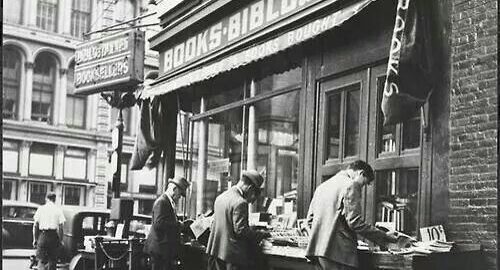
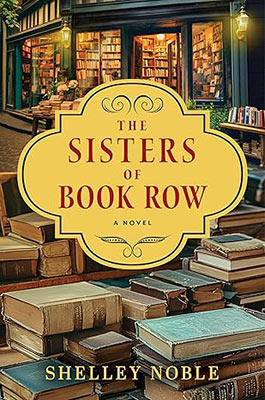
In her novel The Sisters of Book Row, Shelley Noble recreates a vanished literary world: Manhattan’s famous Book Row, a stretch of Fourth Avenue that once housed dozens of rare and secondhand bookstores.
The story takes place in 1915, when Anthony Comstock’s anti-obscenity crusade cast a long shadow over American publishing. Comstock, a powerful moral reformer and postal inspector, used federal law to seize and destroy books, artworks, and even information about women’s health.
Noble’s novel follows three sisters who inherit their father’s bookstore and struggle to keep the shop alive amid increasing censorship and social pressure. As the sisters navigate their own ambitions and secrets, they become entangled in the broader struggle over knowledge, books, and freedom of expression.
Drawing on the rich history of Book Row and the world of early twentieth-century bookselling, Noble portrays a vibrant community of merchants, collectors, and readers who believed deeply in the cultural importance of books.
The novel also touches on the underground circulation of information about women’s health during the era of the Comstock laws, connecting the story of censorship with the emerging fight for reproductive rights.
Through the lives of ordinary people—booksellers, printers, activists—The Sisters of Book Row shows how cultural change often begins with individuals quietly resisting authority.